As the core material for industrial adsorption, the adsorption performance of activated carbon is not determined by a single index, but the pore size structure is the key factor affecting the adsorption efficiency and adaptability to the scene. In different application scenarios, there are significant differences in the size of pollutant molecules and diffusion paths, so the only way to achieve the optimal balance between cost and performance is to accurately match the pore size of activated carbon with the application requirements. In this paper, we will start from the principle of pore size structure, the adsorption logic of different pore sizes, scenario-based selection strategy and practical points to help efficiently complete the selection of activated carbon.
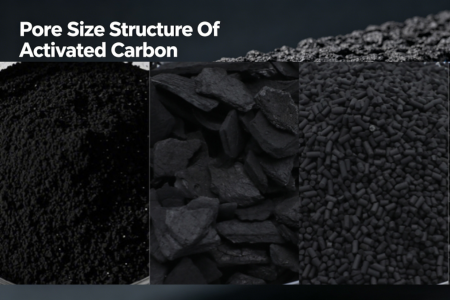


The pore size of activated carbon refers to the porous channel space formed by the activation process, which is the core carrier of activated carbon with adsorption performance. During the activation process, the raw material is physically or chemically activated, the carbon skeleton is cracked and reorganized, and a pore network of different sizes is gradually formed, and the number and distribution of pores directly determine the upper limit of the adsorption capacity of activated carbon. The more reasonable the pore structure, the more efficiently the target molecules can be captured, on the contrary, the adsorption efficiency may be low, waste of resources and other issues – this is why the same specific surface area of the activated carbon, the adsorption effect there will be a world of difference.
The core adsorption pores inside activated carbon, with large number and large specific surface area, the specific surface area of micropores of each gram of activated carbon can account for more than 90% of the total specific surface area, which is the core area of small molecule adsorption, and is equivalent to the “precision catcher” in the adsorption system.
Transitional pores connecting micropores and macropores, with the dual functions of molecular transportation and molecular adsorption, are the “bridge” of the adsorption process, solving the problem that small molecules diffuse into micropores while large molecules cannot enter micropores.
The pores with the largest pore size are mainly used as a channel for macromolecules to enter the interior of activated carbon, which are not directly involved in the core adsorption process but can significantly improve the adsorption kinetic performance, and are equivalent to the “main road” in the adsorption system.
|
Pore size type |
Size range |
Core Role |
|
Microporous |
<2 nm |
Small molecule adsorption core, large specific surface area |
|
Medium Pore |
2-50 nm |
Molecular transportation + medium molecule adsorption, connecting micropores and macropores |
|
Large pore |
>50 nm |
Macromolecule channel to enhance adsorption kinetics |
Pore size distribution (PSD) refers to the proportion of different pore sizes in activated carbon, which is a key indicator of the rationality of the pore structure and one of the core concerns in SEO selection. A high proportion of single pore size will lead to limited application scenarios, while a balanced pore size distribution can be adapted to complex adsorption needs. For example, when the pore size distribution matches the molecular size of the target pollutant, the adsorption capacity of activated carbon can be increased by 30%-50%; if the match is insufficient, even if the specific surface area of the activated carbon is large, it is difficult to play the adsorption efficiency, and even the problem of “adsorption saturation is too fast” and “the treatment effect is not up to standard”. “Problems such as Pore size distribution can be obtained through professional testing means such as nitrogen adsorption method, which is the indispensable core data when selecting the type.
Microporous is the core area of activated carbon adsorption of small molecules, and its core advantage lies in the extremely high specific surface area, which makes it have super adsorption ability for small molecule pollutants, especially suitable for adsorption of gases, volatile organic compounds (VOCs), and other molecules with the size of <2 nm. During the adsorption process, the micropores will firmly capture the small molecules through intermolecular forces, which is the main contributor to the adsorption capacity, which can be quantitatively assessed by the iodine value.
Typical application scenarios: air purification (adsorption of formaldehyde, benzene and other small molecules of harmful gases), solvent recovery (adsorption of ethanol, acetone and other organic solvents), industrial waste gas desulfurization (adsorption of H₂S), drinking water deep purification (removal of residual chlorine, small molecules of organic matter). In this kind of scenario, it is necessary to choose activated carbon with a high percentage of micropores in order to ensure the adsorption efficiency and treatment effect and avoid the problem of “incomplete adsorption”.
Mesopore plays the dual role of “transportation channel + medium molecule adsorption area” in the adsorption system of activated carbon, and its proportion directly determines the adsorption efficiency and diffusion speed. On the one hand, it can provide a path for macromolecule pollutants to enter the microporous area, solving the problem that macromolecules can not enter the microporous area due to the limitation of the pore size; on the other hand, the mesopore itself can adsorb organic molecules within the range of 2-50 nm in size, such as humic acid, fulvic acid, and some dye molecules.
Typical application scenarios: industrial water treatment (removal of COD, organic dyes), printing and dyeing wastewater treatment (adsorption of large molecules of dye molecules), deep purification of drinking water (removal of natural organics), decolorization of food and medicine. In this kind of scenario, the activated carbon with rich mesopores should be preferred to ensure the smooth diffusion and effective adsorption of macromolecular pollutants, and its adsorption performance can be judged by the value of methylene blue.
Macropore is the “main road” inside the activated carbon, which does not have strong adsorption ability itself, but can provide a channel for the macromolecular pollutants to enter the internal pore space quickly, and significantly improve the adsorption kinetic performance. During the adsorption process, the large pores can shorten the diffusion time of pollutant molecules, so that the mesopores and micropores can contact the target molecules more quickly, thus improving the overall adsorption efficiency. Especially for the adsorption load fluctuation and complex molecular size scenarios, the existence of large pores can avoid the adsorption process stalling and reduce the saturation time of activated carbon.
Typical application scenarios: gold extraction from gold mines (adsorption of gold cyanide complexes), high-concentration industrial wastewater treatment (containing macromolecules and suspended particles), flue gas denitrification (rapid adsorption of large molecules, such as NOx), and deep treatment of chemical wastewater. This kind of scenario requires the selection of activated carbon with synergistic distribution of macroporous, mesoporous and microporous pores, taking into account the adsorption efficiency and kinetic performance, and avoiding the poor treatment effect caused by poor diffusion.
The core objective of water treatment (including industrial wastewater and drinking water) is to remove organic pollutants, COD, chromaticity, etc. The target pollutants are mostly medium and large molecules, such as dyes and humic acid. At this time, activated carbon with rich mesopores can realize “molecular transport + molecular adsorption” at the same time, which not only ensures that the macromolecule pollutants can enter into the interior smoothly, but also realizes high efficiency adsorption, and at the same time, takes into account both the treatment efficiency and the operation cost.
Suggestion for selection: choose activated carbon with ≥30% of mesopores, and focus on the value of methylene blue (reflecting the adsorption capacity of mesopores), the higher the value, the better the mesopore performance. For example, for printing and dyeing wastewater treatment, activated carbon with methylene blue value ≥150 mg/g should be selected to ensure efficient removal of dye molecules; for drinking water treatment, a balanced type of activated carbon with mesoporous and microporous pores can be selected to take into account the needs for removal of small-molecule and medium-molecule pollutants. Research shows that the removal rate of dissolved organic substances by coal-based activated carbon with developed mesopores is significantly higher than that of coconut shell carbon and wood-based carbon in water treatment.
Air and gas purification mainly targets small molecular pollutants such as VOCs, H₂S, odor, etc. The molecular size of such pollutants is usually <2 nm, and micropores are the core adsorption area. Activated carbon with a high percentage of micropores has a large specific surface area and strong adsorption capacity, which can quickly capture small molecule pollutants to achieve emission standards or air purification, and at the same time prolong the replacement cycle of activated carbon to reduce operation and maintenance costs.
Suggestions for selection: choose activated carbon with microporous ratio ≥60%, focus on testing the iodine value (reflecting the microporous content), the higher the iodine value, the stronger the microporous adsorption performance, and refer to the national standard GB/T 7702.7-2023 for acceptance testing. For example, activated carbon with iodine value ≥1000 mg/g should be selected for VOCs treatment of industrial waste gas to ensure adsorption efficiency and treatment effect; activated carbon with iodine value of 800-1000 mg/g should be selected for indoor air purification to take into account the adsorption effect and cost. It should be noted that only the iodine value is easy to fall into the selection error, and should be combined with the CTC adsorption rate and other indicators to make a comprehensive judgment.
The core of gold extraction is the adsorption of gold cyanide complexes, which have a large molecular size (usually > 2 nm) and need to diffuse rapidly to the adsorption site. A single pore size can not meet the demand, we need to choose the activated carbon with synergistic distribution of mesopores and macropores, which not only ensures the fast entry of macromolecules, but also realizes high efficiency adsorption, and at the same time improves the adsorption kinetic performance and shortens the cycle of gold extraction.
Suggestion: Priority should be given to activated carbon with 25%-35% of mesopores and 10%-20% of macropores, and attention should be paid to the pore volume, and activated carbon with a pore volume of ≥0.8 cm³/g is more suitable for gold extraction in gold mines. Coconut shell activated carbon can also be used for gold extraction in gold mines due to its well-developed micropores, but it needs to be paired with auxiliary carbon rich in mesopores and macropores to enhance diffusion efficiency.
Some industrial wastewater (e.g., chemical and pharmaceutical wastewater) has complex pollutant composition, different molecular sizes, and large load fluctuations, so activated carbon with a single pore size is not able to meet the adsorption needs of all pollutants. At this time, it is necessary to choose activated carbon with balanced distribution of microporous, mesoporous and macroporous pores to meet the adsorption needs of different types of pollutants, avoiding that part of the pollutants can not be effectively removed due to a single pore size, and ensuring that the treatment effect is stable and meets the standard.
Suggestion for selection: Choose activated carbon with uniform pore size distribution, focus on testing BET specific surface area (total specific surface area) and pore distribution data to ensure that the total specific surface area is ≥1000 m²/g, and that the proportion of each pore size is reasonable. Coal-based activated carbon is preferred for this kind of scenario due to the balanced ratio of microporous and mesoporous, and its high strength and low cost make it suitable for large-scale industrial application, and the ratio of mesoporous and macroporous can be adjusted by adding wood-based activated carbon to optimize adsorption effect.
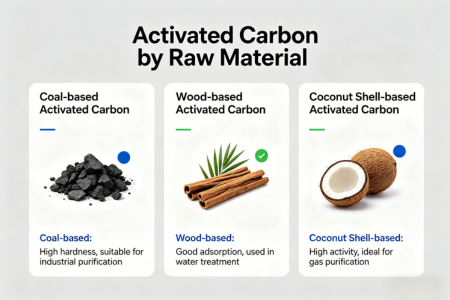
The pore size structure of activated carbon is jointly determined by the type of raw material and activation process, and the pore size characteristics of activated carbon prepared by different raw materials differ significantly, which is an important reference basis for selection. It is an important reference basis for selection. Mastering the correlation between raw materials and pore size can quickly narrow down the scope of selection and improve the selection efficiency, and the following are the pore size characteristics of activated carbon of the three mainstream raw materials:
Activated carbon prepared from coconut shell as raw material has 70%-80% of micropores, large specific surface area and strong adsorption capacity, especially suitable for small molecule adsorption scenarios. With concentrated pore size distribution, stable performance and low ash content, it is the preferred raw material for air purification, solvent recovery, deep purification of drinking water and gold extraction from gold mines. However, the price of coconut shell activated carbon is high, the proportion of mesopore and macroporous is low, it is not suitable for large molecule pollutant adsorption scenario, and the raw material mostly relies on imports, and the cost fluctuation is large.
Coal activated carbon is made from coal activation, with balanced ratio of microporous and mesoporous (50%-60% microporous, 20%-30% mesoporous), wide adaptability, capable of dealing with small molecule pollutants as well as medium and large molecule scenarios, and is widely used in many fields, such as water treatment, industrial waste gas treatment, etc. It has high strength, low cost, low mesoporous and macroporous ratio, and is not suitable for large molecule pollutant adsorption scenarios. Its high strength, low cost and large output make it the most cost-effective choice for industrial scenarios, and it is especially suitable for large-scale, high-load adsorption treatment needs. Studies have shown that coal-based activated carbon is superior to coconut shell charcoal and wood-based charcoal in the removal of dissolved organic matter in wastewater treatment, and is the mainstay charcoal for industrial water treatment.
Wooden activated carbon is made of wood and wood chips, with a high proportion of mesopores and macropores (30%-40% mesopores and 10%-20% macropores), which is suitable for the adsorption of macromolecular pollutants. Its pore structure is loose, diffusion speed is fast, mostly powdered carbon, reaction speed is fast, commonly used in dye wastewater treatment, gold extraction from gold mines, high concentration organic wastewater treatment, food and medicine decolorization and other scenarios. However, wood-based activated carbon has low strength and is easy to be pulverized, so it is not suitable for long-term continuous operation of industrial scenarios.
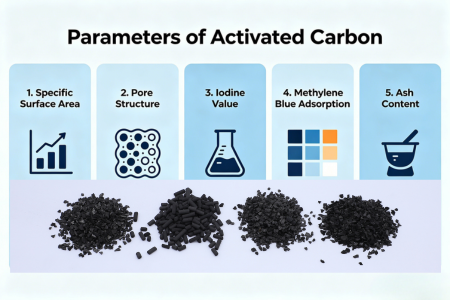
Iodine value is a key index to measure the microporous content and microporous adsorption capacity of activated carbon, the unit is mg/g, which can be tested according to the national standard GB/T 7702.7-2023. The higher the iodine value, the higher the number of micropores of activated carbon and the stronger the microporous adsorption performance. Generally speaking, activated carbon with an iodine value of ≥800 mg/g meets the standard of microporous performance; activated carbon with an iodine value of ≥1000 mg/g is suitable for scenarios with high requirements for microporous adsorption (e.g., air purification, VOCs removal); and activated carbon with an iodine value of <800 mg/g is suitable for adsorption scenarios with low requirements (e.g., common wastewater pre-treatment). It should be noted that the iodine value only reflects the microporous performance, but does not represent the overall adsorption capacity, and should be judged together with other parameters.
Methylene blue value reflects the adsorption capacity of activated carbon for meso-molecules in mg/g. The higher the value is, the stronger the mesopore adsorption capacity is, and the more suitable it is for meso-molecule adsorption scenarios, such as water treatment and dye removal. Usually, the methylene blue value ≥120 mg/g is qualified, and ≥180 mg/g has excellent mesopore performance and can be preferred. Studies have shown that the methylene blue value is highly correlated with the degree of development of micropores and mesopores with a pore size greater than 1.5 nm, which is the core index for judging mesopore performance, and can effectively guide the selection of activated carbon for water treatment scenarios.
BET specific surface area is a measure of the total specific surface area of activated carbon in m²/g, which can be obtained by nitrogen adsorption method. The larger the specific surface area, the greater the theoretical adsorption potential, but need to be combined with the pore size distribution comprehensive judgment – if the specific surface area is large but the pore size does not match the target pollutants, the actual adsorption efficiency will still be low. For example, activated carbon with a high percentage of micropores has a much lower adsorption efficiency than activated carbon with abundant mesopores when dealing with large molecule pollutants, even if the BET specific surface area is as high as 1500 m²/g. In general industrial applications, the adsorption performance of activated carbon with BET ≥1000 m²/g is more stable; products with ≥1200 m²/g can be chosen for high-end scenarios.
Pore volume refers to the total volume of pores per unit mass of activated carbon in cm³/g. The larger the pore volume, the more pollutant molecules it can accommodate. At the same time, it is necessary to clarify the pore size distribution data through nitrogen adsorption and other professional testing means to ensure that the proportion of each pore size matches the application requirements. For example, water treatment scenarios need to focus on the proportion of mesopore volume, gold extraction needs to focus on the proportion of mesopore + macroporous volume, air purification needs to focus on the proportion of microporous volume. Selection can require manufacturers to provide third-party test reports to ensure that the data is true and reliable, the third-party test report should contain test items, standards, methods and detailed results and other content.
The iodine value only reflects the microporous content, and cannot reflect the performance of mesopore and macroporous. In order to improve the iodine value, some manufacturers over-activate the iodine value, resulting in damage to the mesopores and macropores, and although the iodine value is high, the effect of water treatment and macromolecule adsorption is poor. When selecting the type, it is necessary to combine the iodine value, methylene blue value, BET specific surface area and pore size distribution to make a comprehensive judgment, to avoid a single indicator misleading. For example, in the treatment of industrial waste gas VOCs, it is necessary to use “iodine value ≥ 800mg/g + CTC adsorption rate ≥ 60%” double index acceptance, to ensure that the performance of the microporous up to standard.
The molecular size of different pollutants varies greatly, small molecules choose microporous activated carbon, medium molecules choose mesoporous activated carbon, and large molecules choose activated carbon with abundant macropores. If we ignore the molecular size and choose activated carbon with unmatched pore size, the problem of “adsorption capacity meets the standard but the efficiency is extremely low” will occur, which will increase the operation cost. For example, printing and dyeing wastewater contains large molecules of dyes, if we choose the coconut shell activated carbon dominated by microporous, the adsorption efficiency will be greatly reduced, and it is difficult to meet the color removal rate.
Some scenarios (such as continuous flow treatment, gold extraction) require high adsorption speed, only focus on the adsorption capacity and ignore the diffusion rate, which will lead to activated carbon adsorption saturation speed is too fast, frequent replacement to increase costs. When selecting the type, it is necessary to refer to the adsorption kinetic data, choose the activated carbon products with fast diffusion rate, and prioritize the products with synergistic distribution of macropore and mesopore to shorten the pollutant diffusion time. At the same time, it is necessary to combine with the equipment design parameters to control the air speed and residence time of the air tower, to ensure that the pollutants and activated carbon are in full contact.
Low-priced activated carbon may have irrational pore size structure, low porosity, impurity content and other issues, initial cost savings, but later due to low adsorption efficiency, frequent replacement, but increased operation and maintenance costs. When selecting activated carbon, it is necessary to balance the performance and cost, and prioritize the products with matching pore size and stable performance, rather than simply low-priced products. For example, in industrial wastewater treatment, although low-cost wood-based activated carbon is low-cost, it is easy to be pulverized, the adsorption cycle is short, and the long-term operation and maintenance cost is much higher than that of coal-based activated carbon.
Sort out the application scenarios (water treatment/air purification/gold extraction, etc.), test the molecular size of the target pollutants, concentration range, load fluctuations, and clarify the core adsorption objectives (such as removal of COD, VOCs, gold complexes, etc.). For example, water treatment needs to specify the type of pollutants (small molecules/medium and large molecules), COD concentration, and air purification needs to specify the type and concentration of VOCs.
According to the size of pollutant molecules and application scenarios, determine the direction of pore size adaptation: small molecules select microporous dominant, medium and large molecules select pore-rich, large molecules + complex load select balanced pore size or large pore-rich type. For example, for small molecule VOCs, select coconut shell activated carbon with a low percentage of mesopores and a high percentage of micropores, and for large molecule dye wastewater, select coal or wood activated carbon with a high percentage of mesopores.
Combined with the direction of pore size and application scenarios, the preliminary screening of raw materials: coconut shell for air purification, coal for water treatment, and wood for macromolecule adsorption, taking into account the cost and performance requirements. For example, coal-based activated carbon is preferred for large-scale industrial wastewater treatment (cost-effective), coconut shell activated carbon is preferred for high-end drinking water purification (low ash content, well-developed micropores), and wood-based activated carbon is preferred for food decolorization (rich mesopores, fast reaction).
Candidate products are tested for iodine value, methylene blue value, BET specific surface area, pore volume and pore size distribution to ensure that the parameters are up to standard: iodine value in microporous scenario ≥1000 mg/g, methylene blue value in mesoporous scenario ≥180 mg/g, total specific surface area ≥1000 m²/g. Manufacturers may be required to provide third-party test reports to verify the authenticity of the parameters, and the test reports should be in line with the relevant standards and norms.
Select 2-3 qualified products, conduct small or pilot tests, simulate the actual application scenarios, test the adsorption efficiency, saturation time, operational stability and other indicators, and ultimately determine the optimal product. For example, dyeing and printing wastewater treatment can be tested through the small test chromaticity, COD removal rate, VOCs treatment can be tested through the pilot test emission concentration, to ensure that the product is suitable for the actual working conditions.
The wastewater of a printing and dyeing enterprise mainly contains large molecules of azo dyes, with molecular size of about 10-20 nm, and needs to efficiently remove the chromaticity and COD. 1200 mg/g iodine value of coconut shell activated carbon (microporous dominant) was chosen at the beginning, and the treatment effect was poor, with the removal rate of chromaticity of only 30%, the removal rate of COD of less than 40%, and the activated carbon was saturated in 15 days. After adjusting the program, the choice of methylene blue value of 220 mg/g of coal-based activated carbon (40% of the proportion of mesopores), the pilot chromaticity removal rate increased to 85%, COD removal rate of 70%, the adsorption cycle was extended to 45 days, the operating cost reduced by 20%.
Core conclusion: printing and dyeing wastewater and other large molecule pollutants scene, microporous activated carbon is not optimal, mesopore-rich coal-based activated carbon is more adaptable, methylene blue value is the core indicator of selection, rather than iodine value.
The exhaust gas of a chemical enterprise contains benzene, toluene and other small molecule VOCs, with molecular size <1 nm, and needs to be discharged according to the standard (VOCs concentration ≤10 mg/m³). At the beginning, wood activated carbon (medium pore dominant) was used, the adsorption efficiency was low, the emission concentration exceeded the standard (up to 35 mg/m³), and it needed to be replaced in 30 days. After replacing the iodine value of 1100 mg/g of coconut shell activated carbon, microporous accounted for 75%, the pilot emission concentration dropped to less than 5 mg/m³, to meet the environmental requirements, and adsorption cycle extended by three times, operation and maintenance costs reduced by 60%.
Core conclusion: small molecule VOCs treatment scenarios, microporous dominated coconut shell activated carbon is the first choice, iodine value is the core judgment index, and at the same time need to be combined with the CTC adsorption rate and other parameters, to ensure that the adsorption effect is stable.
A:Water treatment is prioritized to select activated carbon with rich mesopores, the proportion of mesopores ≥30%, and the value of methylene blue ≥150 mg/g. According to the type of pollutants, fine-tuning: microporous + mesoporous balanced type is selected for removing small molecules of organics and mesoporous dominant type is selected for removing large molecules of dyes; coal activated carbon is prioritized for industrial wastewater, and coconut activated carbon is prioritized for drinking water.
A: Not necessarily. Specific surface area is the reference of total adsorption potential, but it should be judged in combination with pore size distribution. If the specific surface area is large but the pore size does not match the target pollutant, the actual adsorption efficiency is still low. For example, when activated carbon with a high proportion of micropores treats macromolecular pollutants, the adsorption efficiency is much lower than that of activated carbon with rich mesopores, even if the specific surface area is as high as 1500 m²/g.
A: The professional testing method is nitrogen adsorption, and the percentage of microporous, mesoporous and macroporous pores and pore size distribution data can be tested by Matrix 1000 and other professional instruments, and the samples need to be vacuum degassed before the test to ensure the accuracy of the data. When selecting the model, you can ask the manufacturer to provide a third-party test report to ensure that the data is true and reliable, and the test report should contain detailed information on the testing method, instrument and results.
A: No, it can’t. The pore size structure of activated carbon is specific, and one activated carbon is only suitable for specific molecular size and adsorption needs. Complex scenarios require the use of activated carbon with a balanced pore size, while single scenarios prioritize the selection of products with accurately matched pore sizes, so as to avoid “one-size-fits-all” selection. For example, coconut shell activated carbon is suitable for small-molecule adsorption and cannot be adapted to large-molecule dye wastewater treatment; wood activated carbon is suitable for large-molecule adsorption and is not suitable for small-molecule VOCs treatment.
The core logic of activated carbon selection lies in the precise matching of pore size structure and application requirements. From understanding the principle of pore size structure, to screening the pore size and raw materials in combination with the scenario, to quantifying the parameters and verifying the operation, each step directly affects the adsorption efficiency and operation cost. With the continuous upgrading of the activated carbon preparation process, the controllability of pore size will be further improved to provide more accurate solutions for adsorption applications in various fields, while accurate selection is still the core premise of activated carbon adsorption performance.