May 21,2026
How To Make Activated Carbon From Coconut Shell
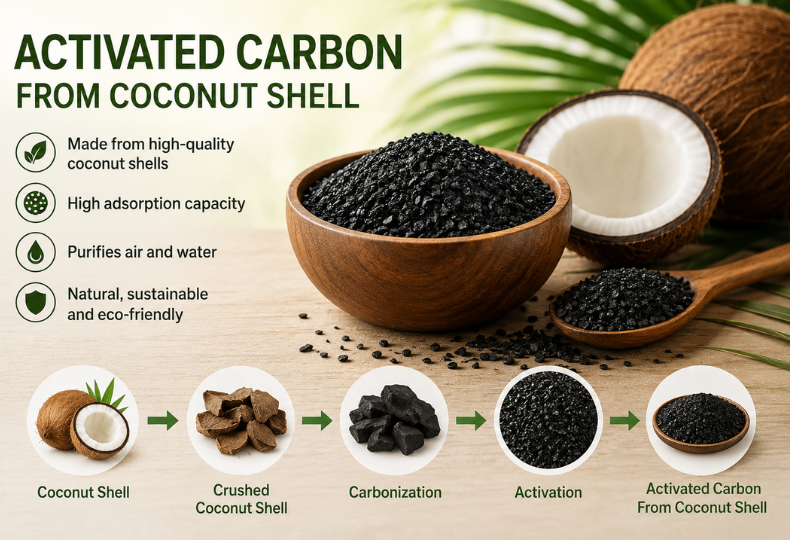
In the field of environmental protection adsorption, coconut shell activated carbon is widely used in water purification, air filtration, food processing and other scenarios due to its natural environmental protection and excellent adsorption performance, making it one of the most popular types of activated carbon today. Compared with coal and wood activated carbon, coconut shell activated carbon is derived from renewable coconut shell resources, the pore structure is more developed, higher adsorption capacity, and non-toxic, harmless, with high practical value. In this article, the complete production process of coconut shell activated carbon will be disassembled in detail, from raw material preparation to finished product processing, from industrial process to simple household methods, with quality judgment, safety precautions and FAQs. What Is Coconut Shell Activated Carbon? Core Definition Of Coconut Shell Activated Carbon Coconut shell activated carbon is a kind of porous carbon adsorbent material formed by taking coconut shell as raw material and going through a series of professional processes such as carbonization and activation. Its core feature is that it has an extremely developed pore structure, with a specific surface area of 500-1500 square meters/g, and the highest even reaches 2000 square meters/g, which is 2-3 times higher than...