At a time when environmental protection and renewable energy are developing vigorously, biogas, as a kind of clean energy originating from sewage treatment plants, landfills and bio-digesters, its purification and quality enhancement has become a key link in realizing resource utilization – Only by removing the harmful pollutants can biogas be transformed into directly utilizable biomethane and renewable natural gas, which are widely used in industry and people’s livelihood. Activated carbon, as a material with excellent adsorption performance, has become an indispensable core adsorbent in the process of biogas purification by virtue of its highly efficient pollutant removal ability.
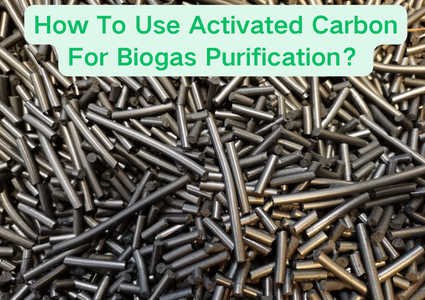
Harmful impurities in biogas are low in content, but extremely destructive, mainly in three aspects: First, corrosion of equipment, will erode the biogas pipeline, valves, combustion equipment and other upstream and downstream facilities, resulting in equipment leakage, frequent failures, significantly increasing equipment maintenance costs and downtime losses; second, affecting the performance of the combustion, interfering with combustion stability of the biogas and thermal efficiency, increasing energy waste; third, the environmental protection is not up to standard, and the environmental protection is not up to standard, and the environmental performance is not up to standard. Third, the environmental protection is not up to standard, combustion will produce toxic and harmful products, limiting its large-scale utilization in the fields of industrial power generation, people’s livelihood gas supply, automotive fuel, etc., and even failing to meet the relevant national emission standards, resulting in biogas not being able to be legally utilized in a compliant manner.
The core reason why activated carbon can become the preferred material for biogas purification lies in its unique material properties: after special carbonization and activation process, activated carbon will form a very high specific surface area (usually up to 1000-2000m2/g) and developed pore structure, which is staggered in size and uniformly distributed, and can accurately match the pollutants of different molecular sizes in the biogas, and then adsorb the pollutants through physical adsorption, physical adsorption, and porous structure. These pores are evenly distributed and can accurately match the pollutants of different molecular sizes in the biogas, and realize targeted adsorption and retention of pollutants through the dual role of physical adsorption and chemical adsorption, so as to remove the harmful impurities from the root and guarantee the quality of biogas.
There are many kinds of pollutants in biogas, and activated carbon can accurately capture the key harmful components to ensure that the quality of biogas meets the standard, and the specific pollutants that can be removed are as follows:
Silicone is one of the most destructive pollutants in biogas, and the Si-O-Si functional group contained in it generates silicon dioxide in the combustion process, which is deposited in engine, engine, and biogas plant. These substances are deposited inside engines, compressors and other equipment, causing wear and clogging and seriously shortening the service life of the equipment. Activated carbon is the optimal adsorbent for removing volatile methyl siloxane from biogas because of its high efficiency in capturing siloxane molecules by virtue of its suitable pore size.
In practical application, coal-based granular activated carbon and columnar activated carbon can achieve good siloxane removal effect, of which columnar activated carbon can also provide regeneration and disposal supporting services to further reduce operating costs, especially suitable for large-scale biogas generation scenarios such as wastewater treatment plants, landfills, etc., to help realize the green cycle of “Waste to Energy”. It helps to realize the green cycle of “waste to energy”.
Hydrogen sulfide is a corrosive pollutant with high content in biogas, which not only corrodes downstream equipments such as pipelines, valves, etc., but also affects the combustion performance of biogas, and even generates toxic gases. Activated carbon plays a key role in hydrogen sulfide removal, of which granular activated carbon is the preferred type due to its high loading capacity and ease of operation.
The core principle of hydrogen sulfide removal by activated carbon is “physical adsorption + chemical conversion”: on the one hand, it relies on its own high surface area to physically adsorb hydrogen sulfide molecules, and on the other hand, it can convert hydrogen sulfide into simple sulfur to achieve high efficiency removal. For example, columnar activated carbon or granular activated carbon can give full play to this characteristic, and can be adapted to the needs of biogas purification with different hydrogen sulfide concentrations.
VOCs are widely found in all kinds of biogas, among which landfill gas and agricultural biogas have the highest content, and ammonia, pinene, limonene, etc. are common, which not only have irritating odor, but also interfere with the normal operation of the downstream biogas purification and storage processes. Activated carbon can efficiently remove these harmful VOCs through physical adsorption to avoid their impact on biogas utilization.
For renewable natural gas projects that need to be connected to pipelines, the content of nitrogen and carbon dioxide in the biogas needs to be strictly controlled – nitrogen is an inert gas, which reduces the calorific value of the biogas, and high carbon dioxide content affects the combustion efficiency of the biogas. Activated carbon can be used in a balanced pressure swing adsorption (PSA) system to separate nitrogen from methane through selective adsorption of methane. Meanwhile, in the purification of renewable natural gas, activated carbon (together with carbon molecular sieve) can effectively separate carbon dioxide to ensure that the biogas meets pipeline delivery standards.
In addition to the main pollutants mentioned above, activated carbon can also be used to remove impurities such as ammonia, mercury and lubricating oil vapors from biogas to further enhance the purity of biogas and to provide protection for subsequent combustion, power generation and other utilization scenarios.
The concentration of hydrogen sulfide in biogas is often as high as thousands of ppm, and if activated carbon is used directly for treatment, the activated carbon will be saturated quickly, which will increase the operation cost, so it is necessary to carry out crude removal first, to reduce the concentration of hydrogen sulfide to 200-300 ppm, and there are two commonly used pre-treatment methods:
This is a dry method of removal, and is suitable for medium and high concentration of hydrogen sulfide, which is suitable for medium and high concentration of ammonia. This method is a dry removal, applicable to medium and high concentration of hydrogen sulfide scene, the core principle is to use iron oxide and hydrogen sulfide chemical reaction, the generation of iron sulfide and water, so as to achieve the removal, and the removal agent can be reused through regeneration.
The specific reaction equation is as follows:
Removal reaction: Fe₂O₃-H₂O + 3H₂S = Fe₂S₃-H₂O + 3H₂O
Regeneration reaction: Fe₂S₃-H₂O + 3/2O₂ = Fe₂O₃-H₂O + 3S
Operation points: fill the ferric oxide removal agent in the fixed-bed reactor, let the biogas pass through it at an even speed, the temperature of the reaction can be controlled at room temperature, and the effect of removal can be checked periodically. When the removal efficiency decreases, regenerate the remover by passing air.
Quebracho extract method belongs to the wet method of removal and is suitable for large-scale biogas treatment scenarios. The core of the method is the use of natural plant extract “quebracho extracts” and trivalent iron (Fe³⁺) to formulate a solution to adsorb and oxidize hydrogen sulfide in the biogas, which has the advantages of low cost, environmental protection, and recyclability. It has the advantages of low cost, environmental protection and recycling.
The specific reaction equations are as follows:
Removal reaction: H₂S + 2Fe³⁺ → S + 2Fe²⁺ + 2H⁺ (Hydrogen sulfide is oxidized to singlet sulfur, and the trivalent iron is reduced to divalent iron)
Regeneration reaction: 4Fe²⁺ + O₂ + 4H⁺ (hydrogen sulfide is oxidized to singlet sulfur, and trivalent iron is reduced to divalent iron). ⁺ → 4Fe³⁺ + 2H₂O (air is passed in to oxidize the divalent iron to trivalent iron, and the solution can be reused)
Operation points: inject the quebracho solution into the absorption tower, let the biogas and the solution come into contact with each other sufficiently, and control the reaction temperature in the range of 20-40 ℃, to ensure that there is sufficient contact between gas and liquid, and the regenerated solution can be recycled into the absorption tower to reduce the operation cost. Reduce the operation cost.
After coarse removal, the concentration of hydrogen sulfide in the biogas is reduced to 200-300 ppm, at this time, it is necessary to use activated carbon to carry out fine removal to reduce the concentration of hydrogen sulfide to less than 1 ppm, and at the same time, further adsorb the residual impurities such as siloxanes, VOCs, etc., which is used as a polishing part of biogas purification to guarantee the quality of biogas to meet the standard. As a “polishing” part of biogas purification, the quality of biogas is guaranteed to meet the standard.
The core mechanism of fine removal by activated carbon is divided into two types:
One is physical adsorption: activated carbon has a very high specific surface area (usually up to 1000-2000 m2/g) and developed pore structure, which can quickly capture small molecule pollutants such as H2S and siloxane in biogas to realize physical interception;
The second one is chemical adsorption: through the impregnation of metal oxides on the surface of the activated carbon (e.g., CuO, Fe₂O₃, MgO, ZnO), the activated carbon is also used for adsorbing the residual impurities such as VOCs and other substances, which is the “polishing” part of the biogas purification, MgO, ZnO) or alkaline substances (such as KI, NaOH, KOH), so that the activated carbon and hydrogen sulfide and other pollutants have a chemical reaction, to achieve the depth of removal, this impregnated activated carbon removal efficiency is much higher than ordinary activated carbon.
Operation points: Fill the activated carbon in the fixed-bed or fluidized-bed reactor, control the flow rate of the biogas moderately, ensure that the biogas is in full contact with the activated carbon, monitor the concentration of pollutants in the exported biogas on a regular basis, and replace or regenerate the activated carbon when it is saturated in order to avoid affecting the purification effect.
In addition to hydrogen sulfide, if the content of siloxane, VOCs, nitrogen, carbon dioxide and other pollutants in the biogas exceeds the standard, activated carbon can be used for special treatment:
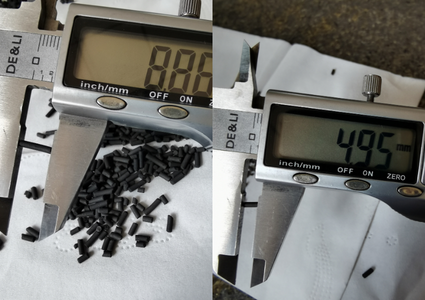
Granular activated carbon is made from high-quality coal through crushing, molding, carbonization, activation and other processes, with a particle size of 4×10 mesh, and its core advantage is a well-developed pore structure and large adsorption capacity, Its core advantages are well-developed pore structure, high adsorption capacity, easy to operate and replace, and adaptable to a variety of reactor types (fixed bed, fluidized bed).
Key features: high versatility, high adsorption capacity, easy loading and unloading and maintenance, suitable for treating biogas containing a mixture of various pollutants;
Application scenarios: small and medium-sized biogas purification systems, such as kitchen waste biogas plants, medium-sized landfill gas purification facilities, especially suitable for scenarios with high requirements for operational flexibility.
Columnar activated carbon is made of high quality coal as the raw material into cylindrical particles. The core advantages are high mechanical strength, low pressure drop, high abrasion resistance, high adsorption efficiency, and long service life, which is suitable for large-scale systems in continuous operation.
Key features: low pressure drop, strong abrasion resistance, large specific surface area; application scenarios: large-scale industrial fixed-bed system (such as large-scale sewage plants, large-scale landfill), especially suitable for high hydrogen sulfide concentration biogas treatment.
Application scenario: large-scale industrial fixed-bed system, such as large-scale sewage treatment plants, large-scale landfills for biogas purification, especially suitable for biogas treatment with high hydrogen sulfide concentration.
Impregnated activated carbon is made on the basis of ordinary activated carbon impregnated with alkaline substances, oxidizing agents or metal oxides, specially designed for corrosive pollutants (e.g., hydrogen sulfide, ammonia), with the core advantages of high desulfurization efficiency and large adsorption capacity.
Key features: high desulfurization efficiency, which can reduce the concentration of hydrogen sulfide to less than 1 ppm; adsorption capacity is 2-5 times higher than that of ordinary activated carbon; fast reaction speed, which can maintain high efficiency at low temperatures; long service life, which is suitable for stable operation scenarios;
Application Scenarios: High-sulfur biogas removal, biogas purification containing ammonia and sulfur oxides, such as biogas purification generated by supporting biogas facilities of chemical enterprises and digestion of high-concentration organic wastewater.
|
Activated Carbon Type |
Strengths |
Applicable Pollutants |
|---|---|---|
|
High adsorption capacity, easy loading and unloading, suitable for a wide range of reactors |
Low to medium concentrations of hydrogen sulfide, VOCs, siloxanes |
|
|
High strength, low pressure drop, abrasion resistance, long life, renewable |
High concentration of H2S, siloxanes and mixed pollutants |
|
|
Impregnated activated carbon |
High stripping efficiency, high adsorption capacity, low temperature and high efficiency, highly targeted |
Corrosive pollutants such as high-concentration H2S, ammonia, sulfur oxides, etc. |
Compared with other biogas purification materials (such as molecular sieve, adsorption resin), activated carbon has obvious advantages, especially suitable for large-scale and diversified biogas purification scenarios, the specific advantages are as follows:
It can efficiently capture low-concentration and high-concentration pollutants, whether it is hydrogen sulfide, siloxane, or VOCs, and can realize deep removal, so as to ensure that the quality of biogas is stable and meets the standard;
It can effectively remove corrosive and abrasive pollutants, avoid equipment corrosion and clogging, prolong the service life of CHP engine, compressor, gas turbine, membrane purification device and other equipments, and reduce the equipment maintenance cost;
Activated carbon bed has a long service life and a long replacement cycle, and part of the activated carbon (e.g. VPR regeneration activated carbon) can be regenerated and reused, and at the same time, the operation process has low energy consumption and simple maintenance, which significantly reduces the overall operating costs;
Adaptable to different scales of biogas purification systems, whether it is a farm biogas plant, a small or medium-sized landfill, or a large-scale sewage treatment plant or an industrial anaerobic digester, the amount of activated carbon and the specifications of the reactor can be adjusted according to the demand, and the flexibility of adaptation;
Activated carbon itself is non-toxic, harmless, and can be recycled through regeneration, will not produce secondary pollution, and at the same time help the biogas to achieve resource utilization, reduce emissions, in line with the concept of green and low-carbon development.
Many practitioners use activated carbon for biogas purification, due to improper operation or wrong selection, resulting in poor purification results, rising operating costs, and even damage to equipment, the following four common misconceptions need to be avoided:
A1: There is no fixed standard for the service life, it depends on the concentration of pollutants, biogas flow rate, type of activated carbon and operation conditions; ordinary activated carbon can be used for 3-6 months in low concentration scenarios, and impregnated and granular activated carbon can be used for 6-12 months in high concentration scenarios, and the periodical regeneration can be prolonged by 2-3 times.
A2: Choose according to the concentration of hydrogen sulfide: use ordinary granular activated carbon for <200ppm; use granular activated carbon for 200-1000ppm; give priority to impregnated activated carbon for >1000ppm, which has better removal efficiency and adsorption capacity.
A3: No. Ordinary activated carbon can only adsorb a small amount of water. Ordinary activated carbon can only adsorb a small amount of water, which can’t meet the demand of biogas purification and dehydration. High moisture biogas needs to be pre-treated with special dewatering equipment first, and then activated carbon is used to treat the pollutants.
A4: Yes. Small and medium-sized biogas plants have small flow rate and low concentration of pollutants, and granular activated carbon can meet the purification requirements with simple operation, low cost and no complicated supporting facilities.
Activated carbon has become an indispensable core material in the process of biogas purification by virtue of its efficient adsorption performance, flexible adaptability, and low operating cost. It not only removes harmful pollutants in biogas, such as hydrogen sulfide, siloxane, VOCs, etc., in depth, but also protects the equipment, improves the quality of biogas, and helps biogas to realize the resourcefulness and large-scale utilization.
To realize the best effect of activated carbon in biogas purification, it is necessary to follow the operation process of “pre-treatment – fine treatment – special treatment”, choose the right type of activated carbon according to the composition of biogas and concentration of pollutants, and at the same time avoid the common misunderstandings such as wrong selection and neglect of water pre-treatment. With the continuous promotion of environmental protection policy, the application of activated carbon in the field of biogas purification will be more widely used, and become an important support to promote the development of renewable energy.