In the field of environmental protection adsorption, coconut shell activated carbon is widely used in water purification, air filtration, food processing and other scenarios due to its natural environmental protection and excellent adsorption performance, making it one of the most popular types of activated carbon today. Compared with coal and wood activated carbon, coconut shell activated carbon is derived from renewable coconut shell resources, the pore structure is more developed, higher adsorption capacity, and non-toxic, harmless, with high practical value. In this article, the complete production process of coconut shell activated carbon will be disassembled in detail, from raw material preparation to finished product processing, from industrial process to simple household methods, with quality judgment, safety precautions and FAQs.
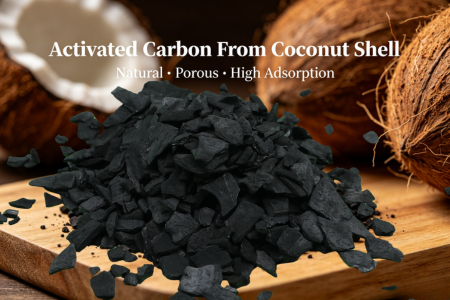
Coconut shell activated carbon is a kind of porous carbon adsorbent material formed by taking coconut shell as raw material and going through a series of professional processes such as carbonization and activation. Its core feature is that it has an extremely developed pore structure, with a specific surface area of 500-1500 square meters/g, and the highest even reaches 2000 square meters/g, which is 2-3 times higher than that of coal-based activated carbon, which is also the key reason for its outstanding adsorption performance.
Compared with other types of activated carbon, coconut shell activated carbon has four core advantages:
1 Natural and environmentally friendly, the raw material comes from coconut shell, which is a renewable agricultural waste, realizing the recycling of resources and conforming to the concept of sustainable development.
2 strong adsorption performance, can efficiently adsorb heavy metals in water, organic matter, odor, and formaldehyde, benzene and other harmful gases in the air.
3 High purity, low ash content, no secondary pollution.
4 Wide applicability, acid and alkali resistance, strong stability.
Whether it is acidic industrial wastewater or alkaline domestic sewage, it can normally play the role of adsorption. Because of these advantages, it is widely used in water purification, air purification, gold extraction, food processing and other fields.
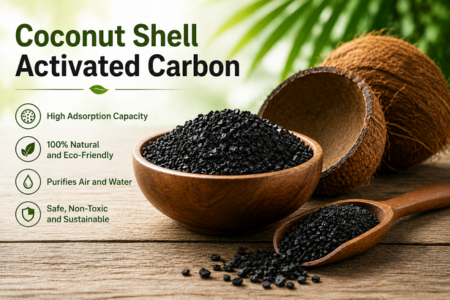
Mature coconut shells have hard texture, developed fiber structure and higher carbon content, which can lay the foundation for the subsequent formation of developed pores; while immature coconut shells have soft texture and low carbon content, and the adsorption performance of the activated carbon made from them is poor and easy to break.
The higher the hardness and the more sufficient the carbon content, the better the durability and adsorption performance of the finished activated carbon, which is because hard coconut shells can better retain the skeleton structure and reduce the pore collapse during the carbonization process.
Must avoid the use of contaminated coconut shells, such as coconut shells with oil, soil, salt, these impurities will remain in the carbonization, activation process, not only affect the purity of the finished product, but also block the pores, reduce the adsorption effect, it is recommended to give preference to the use of fresh, clean raw materials of coconut shells.
Coconut shells into the water repeatedly rinsed to remove the surface of the soil, salt, residual pulp and other impurities, and then put the cleaned coconut shells in a ventilated, dry environment to dry naturally, can also be used in a low-temperature drying method, the purpose is to completely remove the surface moisture and residual impurities, to avoid subsequent carbonization of the smoke is too large, caking and other problems.
After drying, the coconut shell is crushed into uniform small pieces, and the particle size is controlled at 1-5cm – too large a piece will lead to uneven heat during carbonization, and the interior can not be completely carbonized; too small a piece is easy to be burned during carbonization, affecting the yield. After crushing, it can be screened through the sieve mesh to remove too large or too small particles to ensure that the raw material particle size is uniform.
The moisture content of the pretreated coconut shell should be controlled below 15%, which is the key to optimize the carbonization efficiency. Too high moisture will prolong the carbonization time, increase energy consumption, and may also lead to incomplete carbonization; too low moisture will make the coconut shell too brittle and increase the crushing rate, it is recommended to control the moisture in a reasonable range by drying or natural drying.
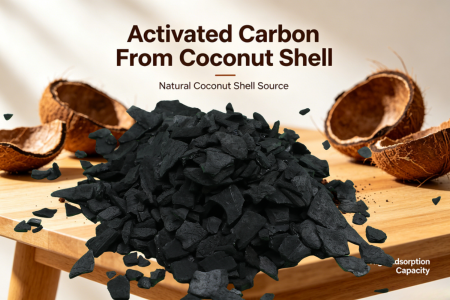
Carbonization is one of the core steps in the production of coconut shell activated carbon, the essence of which is to thermally decompose the lignin, cellulose and other organic components in coconut shells under anaerobic conditions, removing the volatile substances and leaving behind a carbon-rich skeleton structure (i.e., coconut shell charcoal), which is ready for the subsequent activation of the formation of pores. In short, this step is the process of “turning coconut shell into carbon”.
The core of carbonization is “anaerobic pyrolysis”, also known as pyrolysis. The pre-treated coconut shells are put into a closed container and heated under the condition of isolation from oxygen. The temperature is gradually increased, and the water and volatile organic compounds (e.g., methane, carbon monoxide, etc.) in the coconut shells are gradually decomposed and discharged, ultimately leaving the coconut shells carbon with high carbon content and preliminary pore structure. During this process, the control of oxygen is crucial – if oxygen enters, the coconut shells will burn and will not be able to form carbon, but will cause a waste of raw materials. At the same time, the carbonization process will form the basic pore structure, for the subsequent activation process to further expand the pore space, enhance the adsorption performance to lay the foundation.
This is the simplest and low-cost method, which mainly uses earth kiln, brick kiln or metal kiln. Put the coconut shell block into the kiln, seal the kiln mouth, heat it by burning wood, coal and other fuels, control the temperature and oxygen content, the charring time is about 8-12 hours, the advantage is simple equipment, low cost, the disadvantage is that the temperature control is difficult, the charring effect is not uniform, and the quality of the finished product fluctuates greatly.
This is the mainstream method of industrial scale production, using large rotary kiln equipment, coconut shell blocks through the feed port into the rotary kiln, the kiln continues to rotate, so that the coconut shells are heated uniformly, and at the same time through professional equipment to control the oxygen content and temperature, to achieve continuous production. The advantages of this method are high carbonization efficiency, stable quality of finished products, suitable for mass production, and the disadvantages are large investment in equipment and high energy consumption, suitable for enterprise use.
Suitable for home or laboratory small batch attempts, using small metal furnace, ceramic furnace and other equipment, coconut shell blocks into the furnace, sealed with electric heating or gas heating, control the temperature at 400-700 ℃, carbonization time is about 4-6 hours. This method is easy to operate, covers a small area, and is suitable for hobbyists to try, but the output is low and oxygen needs to be strictly controlled to avoid burning.
The optimal temperature for carbonization is 400-700°C, with different temperature controls at different stages: the early stage (200-400°C) is mainly to remove water and volatile organic matter from coconut shell; the later stage (400-700°C) is the thermal decomposition of organic components to form the core structure of coconut shell charcoal. If the temperature is too low, the organic components can not be completely decomposed, and the carbon content of coconut shell carbon is low and the pore space is small; if the temperature is too high, it will lead to the collapse of the structure of coconut shell charcoal, reduce the effect of subsequent activation, and even burn the raw materials.
It is recommended to control the heating rate at 5-10℃/min, and raise the temperature at a uniform rate to avoid the coconut shell block cracking caused by too fast heating; the residence time (i.e. the holding time of coconut shell at the highest temperature) is 1-2 hours to ensure the complete decomposition of the organic components and the formation of structurally stable coconut shell charcoal. Too short a residence time will result in incomplete carbonization; too long a residence time will increase energy consumption and may result in deterioration of the coconut shell carbon.
The whole process must maintain an oxygen-free or micro-oxygen environment, which can be realized by sealing the equipment and passing inert gas such as nitrogen. If the oxygen content is too high, the coconut shell will burn and cannot form coconut shell carbon; if the oxygen content is too low, the decomposition of organic components is not complete, affecting the quality of coconut shell carbon.
Through “perforation”, the specific surface area of coconut shell activated carbon is increased from several hundred square meters/g to 500-1500 square meters/g, and the highest can reach 2000 square meters/g, the larger the specific surface area, the stronger the adsorption capacity.
Form a pore system in which micropores, mesopores and macropores coexist, in which micropores are responsible for adsorption of small molecules (e.g., formaldehyde, heavy metal ions), and mesopores and macropores are responsible for adsorption of large molecules (e.g., organics, odor molecules), so as to enhance the comprehensive adsorption performance of the activated carbon, and to satisfy the use requirements of different scenarios.
Coconut shell activated carbon is put into the activation furnace, heated to 800-1000 ℃, and then passed into the water vapor, which reacts with the coconut shell carbon to remove the impurities and some carbon elements in the carbon body, thus expanding the pores and increasing the specific surface area. The advantages of this method are mild reaction and high purity of finished products, the disadvantages are high temperature requirement, high energy consumption and long activation time (about 2-4 hours).
Similar to the steam activation method, the coconut shell charcoal is heated to 800-1000 ℃, and carbon dioxide gas is introduced, the carbon dioxide reacts with the coconut shell charcoal, etching the surface of the charcoal body and forming a large number of pores. The advantages of this method are uniform pore distribution and stable adsorption performance, but the disadvantages are large investment in equipment and low activation efficiency, which is suitable for the production of high-end activated carbon.
Commonly used chemical activators include potassium hydroxide (KOH), zinc chloride (ZnCl₂), phosphoric acid (H₃PO₄), etc., which can realize pore enlargement by reacting with coconut shell carbon.
Mix coconut shell carbon and chemical activator in a certain proportion (usually the mass ratio of activator and coconut shell carbon is 1:1-2:1), mix well, and then put into the activation furnace, heating and activation at a temperature of 400-700 ℃, the reaction time is about 1-2 hours. During the activation process, the chemicals will react with the impurities in coconut shell carbon, and at the same time etch the surface of the carbon body to form a large number of pores, and the activation temperature is much lower than that of the physical activation method, which can effectively reduce energy consumption.
|
Activation Methods |
Advantages |
Disadvantages |
Applicable Scenarios |
|
Physical activation method |
Environmentally friendly, no residue, high purity of finished products |
High energy consumption, low activation efficiency and high cost. |
Water purification, food processing and other scenes that require high purity |
|
Chemical activation method |
High activation efficiency, low energy consumption, large specific surface area of the finished product. |
Need to use chemicals, cleaning is not complete easy to have a residue, have a certain impact on the environment |
Industrial wastewater treatment, exhaust gas treatment and other scenes that do not require high purity. |
After carbonization and activation of coconut shell activated carbon, it needs to be post-treatment and processing to remove impurities and adjust the performance before it can become a finished product that meets the use standard, which mainly includes three steps of cleaning and neutralization, drying, crushing and sieving.
The core purpose of this step is to remove the residual impurities and chemical agents in the activated carbon (mainly for the chemical activation method), adjust the pH value, and ensure that the finished product is safe and free from secondary pollution.
Put the activated activated carbon into clean water and rinse it repeatedly until the rinsed water is clear and transparent. For chemically activated activated carbon, it is also necessary to add appropriate amount of acid or alkali to adjust the pH value to 6-8 (neutral range) to avoid acidic or alkaline residues affecting the use – for example, activated carbon used for water purification, if the pH value is too high or too low, it will For example, if the pH value is too high or too low for water purification, it will affect the water quality; for activated carbon used in food processing, neutral pH value can avoid affecting the taste and quality of food. After cleaning, the activated carbon is fished out and prepared for drying.
The purpose of drying is to remove the water in the activated carbon to prevent mold and mildew during storage and use, and to ensure stable adsorption performance.
The drying temperature is controlled at 100-120°C. Drying and airing can be used to control the moisture content of the activated carbon below 10%. Too high moisture content will lead to mold and agglomeration of activated carbon, blocking pores and reducing adsorption performance; too low moisture content will make the texture of activated carbon too brittle and easy to break, affecting the use effect. After the drying is completed, the activated carbon will present a black, loose state, with a preliminary adsorption capacity.
Activated carbon is crushed into fine powder, with a particle size usually in the range of 100-300 mesh, characterized by large specific surface area and fast adsorption speed, which is suitable for scenarios such as drinking water purification, decolorization of food processing, and industrial wastewater treatment, such as removing pigments and odors in sugar solution during sugar production, and fast adsorption of hazardous substances in drinking water treatment.
Activated carbon is crushed into granular form with a particle size of 0.5-5mm, characterized by high strength and unbreakable, which is suitable for use in air purifier cartridges, water purifier cartridges, exhaust gas filtration and other scenarios, such as adsorption of harmful gases such as formaldehyde, benzene and other harmful gases in home air purifiers, and long term filtration of water quality in water purifiers.
Activated carbon powder is mixed with binder and pressed into a column, characterized by high strength and long service life, which is suitable for industrial waste gas treatment, large-scale water treatment equipment, gold extraction and other scenarios, such as for the adsorption of cyanide complexes of gold in gold extraction, and for the adsorption of volatile organic compounds (VOCs) in industrial waste gas treatment.
After crushing and screening, the finished product should be strictly inspected, focusing on core quality indexes such as iodine value, specific surface area, ash content, etc., to ensure that it meets the standards of the corresponding use scenarios. After passing the inspection, the product can be sealed and packaged according to the requirements, stored in a dry, ventilated and odorless environment to avoid moisture caking, and then put into practical use.
This is the core index to measure the adsorption capacity of activated carbon in mg/g. The higher the iodine value, the stronger the adsorption performance. The iodine value of high-quality coconut shell activated carbon is usually in the range of 800-1200mg/g, and some high-end products can reach more than 1300mg/g. Activated carbon with an iodine value of less than 600mg/g has poor adsorption performance, and is not recommended to be used in core scenarios of water purification and air purification.
The unit is ㎡/g, which directly reflects the number of pores of activated carbon, the larger the specific surface area, the stronger the adsorption capacity. The specific surface area of high-quality coconut shell activated carbon is usually in the range of 1,000-1,500 m²/g, and high-end products can reach 2,000 m²/g. Activated carbon with a specific surface area of less than 500 m²/g has a poor adsorption effect.
Reflecting the mechanical strength of activated carbon, the higher the hardness and the better the abrasion resistance, the less likely to be broken and the longer the service life. Especially for granular and columnar activated carbon, insufficient hardness will lead to breakage in the process of use, clogging filtration equipment and affecting the use effect, and the hardness of activated carbon suitable for filtration scenarios needs to be more than 90%.
It refers to the content of impurities left after the burning of activated carbon, the lower the ash content, the higher the purity of activated carbon and the better the adsorption performance. The ash content of high-quality coconut shell activated carbon is usually less than 5%. High ash content will block the pores, reduce the adsorption capacity, and may also produce secondary pollution.
High-quality coconut shell activated carbon should have a pore structure with micropores, mesopores and macropores coexisting. Micropores are responsible for the adsorption of small molecules, mesopores and macropores are responsible for the adsorption of large molecules, and the distribution of pores is uniform to meet the adsorption needs of different scenarios. If the pore distribution is single, it is only suitable for the adsorption of specific types of harmful substances, and the applicability is poor.
Industrial production is mainly oriented to enterprises and factories for mass production of qualified coconut shell activated carbon to meet the needs of industry, municipal and other scenarios.
Advantages: advanced equipment (e.g. rotary kiln, professional activation furnace, automated production line), precise control of temperature, oxygen and other parameters, stable quality of finished products, high purity, good adsorption performance, continuous production, large output to meet the demand for large-scale use; and equipped with perfect environmental protection equipment, which can effectively deal with the waste gas and waste water generated in the process of production, in line with the environmental protection standards, and many enterprises have also obtained ISO Many enterprises have also obtained ISO 14001 environmental management system certification.
Disadvantages: large investment in equipment, high energy consumption, high production costs, complex production process, the need for professional and technical personnel to operate, not suitable for personal or small batch production.
Carbonization, activation process will produce carbon monoxide, volatile organic compounds (VOCs) and other harmful gases, industrial production needs to be equipped with exhaust gas treatment equipment, the harmful gases will be purified and then discharged; family DIY needs to be carried out in the well-ventilated outdoor, to avoid the accumulation of harmful gases, which is harmful to human health.
When using chemical activation method, the activator (such as KOH, ZnCl₂) is corrosive and toxic, it is necessary to take protective measures, wear gloves, goggles, masks and other protective equipment to avoid direct contact with the skin and respiratory tract; when storing chemicals, they need to be sealed and stored away from fire and water sources to avoid leakage; after use, the waste chemicals need to be harmlessly treated and then discharged, to avoid polluting the soil and water sources. Water source.
Wastewater generated by cleaning activated carbon, especially cleaning wastewater after chemical activation, contains residual chemicals, industrial production needs to be equipped with wastewater treatment equipment, and the wastewater should be discharged after reaching the standard; cleaning wastewater of family DIY needs to be diluted with water before pouring into the sewer to avoid polluting the environment.
During the operation process, it is necessary to avoid contacting high-temperature equipment and high-temperature coconut shell charcoal to prevent scalding; when family DIY, it is necessary to keep away from children and flammable and explosive items to avoid fire; in industrial production, operators need to be professionally trained and operate in strict accordance with the operating procedures to ensure production safety.
It is used for deep purification in water treatment plant, family water purifier, barrel water production, etc. It can effectively remove heavy metals (such as lead, mercury, arsenic), organic matter, residual chlorine, odor and chromaticity in the water, improve the taste of water and ensure the safety of drinking water, and it is one of the most commonly used types of activated carbon in the field of water purification.
Used in household air purifiers, automobile air filters, office ventilation systems, chemical plant exhaust treatment, etc. It can adsorb harmful gases such as formaldehyde, benzene, toluene, TVOC and other gases in the air, as well as odors (e.g., cigarette smoke, kitchen odors, pet odors) to improve air quality; in atomic energy facilities, it can also adsorb radioactive krypton, xenon and other gases to ensure the safety of emissions.
In gold extraction, coconut shell activated carbon can adsorb the cyanide complexes of gold, and obtain pure gold through desorption and electro-accumulation, etc. Its adsorption capacity can be up to 950-1000mg/g, and it is one of the core materials in the field of gold extraction, which has the advantages of high adsorption efficiency and renewable utilization.
Coconut shell activated carbon that meets food-grade standards can be used for food decolorization, deodorization and purification, such as removing pigment and odor in sugar liquid during sugar production, adsorbing impurities and odor during edible oil refining, and removing turbidity and odor in wine and fruit juice production to improve product quality.
Used in the treatment of industrial wastewater such as printing and dyeing wastewater, electroplating wastewater, coking wastewater, etc., it can effectively remove organic matter, heavy metal ions and chromaticity in the wastewater, reduce the COD and BOD index of the wastewater to meet the emission standard, and at the same time, it can recover useful substances in the wastewater to realize the recycling of resources, for example, in the treatment of printing and dyeing wastewater, it can effectively remove the organic components and chromaticity of the dyestuffs; in the treatment of electroplating wastewater, it It can adsorb heavy metal ions and reduce the toxicity of wastewater.
It can also be used in catalyst carrier, solvent recovery, soil improvement, biomedicine and other fields, for example, as a catalyst carrier, it can improve the activity and stability of the catalyst; as a soil conditioner, it can increase soil aeration and water retention, optimize the structure of the microbial community, and it is especially effective in saline and alkaline land management; in solvent recovery, it can adsorb organic solvents such as gasoline, acetone and other organic solvents at a high speed, and it can be reused dozens of times. dozens of times.
This is the most common mistake. An activation temperature lower than 800℃ (physical activation) or 400℃ (chemical activation) will lead to ineffective pore expansion, small specific surface area and poor adsorption performance.
Avoid method: strictly control the activation temperature, industrial production can use professional temperature control equipment, family DIY can observe the flame color, control the heating time, roughly determine whether the temperature is up to standard.
The use of immature, contaminated coconut shells, or raw material pretreatment is not complete, will lead to low purity of the finished product, poor adsorption properties, and even odor.
Avoidance method: Prioritize the use of mature, clean and non-polluted coconut shells, and strictly follow the pretreatment process to do a good job in cleaning, drying, crushing, moisture control and other steps.
Especially after chemical activation of activated carbon, if the cleaning is not thorough, chemical agents will remain, affecting the use of safety and adsorption performance, and even produce secondary pollution.
Avoidance: Repeatedly rinse the activated carbon until the water after rinsing is clear and transparent. Chemically activated activated carbon should be additionally neutralized and the pH value adjusted to neutral.
According to the use of the scene to choose the appropriate particle size, if the particle size is too large, the adsorption speed is slow; if the particle size is too small, easy to block the filtration equipment, affecting the use of the effect.
Avoidance method: according to the actual demand, the activated carbon will be crushed and sieved into appropriate particle size, such as powder activated carbon for water purification, granular activated carbon for air filtration.
A: Coconut shell carbon is the product of carbonization of coconut shell, which only has preliminary pore structure and limited adsorption performance; coconut shell activated carbon is the product of activation treatment of coconut shell carbon, which has a more developed pore structure and larger specific surface area, and its adsorption performance is far more than that of coconut shell carbon, and it is an adsorbent material with practical application value. Simply put, coconut shell carbon is a “semi-finished product” and coconut shell activated carbon is a “finished product”.
A: There is no absolute “better”, and the choice should be made according to the usage scenario. Physical activation method is environmentally friendly, no residue, high purity of the finished product, suitable for water purification, food processing and other high purity requirements of the scene, but high energy consumption, high cost; chemical activation method is highly efficient, low cost, suitable for industrial wastewater treatment, waste gas treatment and other low purity requirements of the scene, but need to do a good job of cleaning, to avoid chemical residue.
A: The core is to do a good job in three aspects: first, selecting high-quality and mature coconut shell raw materials, and doing a good job in pretreatment; second, strictly controlling the temperature and time of carbonization and activation to ensure that the pores are fully formed; third, doing a good job in post-processing, thorough cleaning, drying, and avoiding the impact of impurities and moisture on adsorption performance; in addition, choosing the right particle size according to the use of scenarios can also enhance the adsorption effect.
A: Yes, coconut shell activated carbon adsorption saturation, can be reused through high temperature regeneration (heated to 800-1000 ℃, to remove the adsorbed material in the pore space), after regeneration, adsorption performance will be slightly reduced, but still meet the basic needs of the use of the activated carbon in industrial production is usually regenerated to reduce costs and realize the recycling of resources.
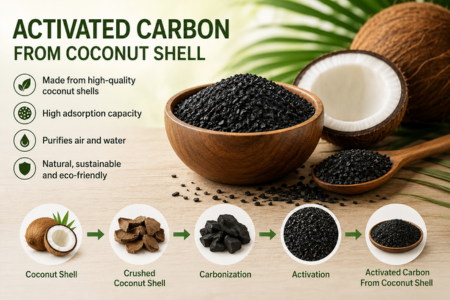
The production of coconut shell activated carbon is a complete process of “raw material screening – pretreatment – carbonization – activation – post-treatment”, and each link needs to strictly control the parameters in order to produce high-performance, high-purity finished products. With the increasing demand for environmental protection, coconut shell activated carbon, as a natural and efficient adsorption material, will play an important role in more fields in the future, contributing to the green and sustainable development.