Phenol is a common toxic organic pollutant in industrial wastewater, which widely exists in all kinds of industrial discharged water, and it is characterized by strong toxicity and difficult to degrade, which will not only cause fatal harm to aquatic organisms, but also accumulate through the food chain and threaten human health. At present, countries have set strict standards for the discharge of phenol in wastewater, and how to efficiently and stably remove phenol from wastewater has become an important issue in the field of industrial wastewater treatment. Powdered Activated Carbon (PAC) has become one of the mainstream technologies for treating phenol in wastewater by virtue of its excellent adsorption performance, ease of operation, etc. It can flexibly cope with the demand for removing phenol in different working conditions such as low concentration, high concentration, etc., and it is both practical and economical, so it is widely used in industrial wastewater treatment.
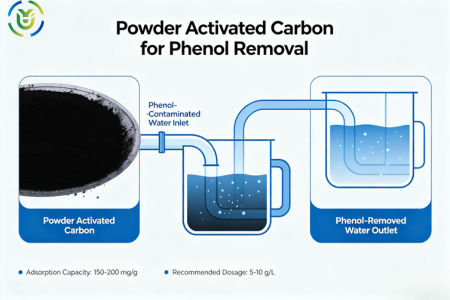
Phenol (chemical formula C₆H₅OH), also known as carbolic acid, is a colorless crystalline substance with a special smell, and its core chemical properties determine the difficulty of its treatment: high solubility in water, easy to form a homogeneous solution with water, which is difficult to be separated by simple physical precipitation; strong toxicity, endocrine disruption and mutagenicity, and it is also widely used in industrial wastewater treatment. It is extremely toxic, endocrine disrupting and mutagenic, and persistent in the aquatic environment, not easy to be degraded naturally; at the same time, phenol is hydrophobic and aromatic, which directly affects its adsorption effect, and also makes it easier to be accumulated in the water body. In addition, the physical properties of phenol are special, with a melting point of 40.5°C and a boiling point of 181.7°C. It is easy to crystallize at room temperature, which further increases the complexity of the treatment process.
Phenol in wastewater mainly originates from various types of industrial production activities, involving a number of industry sectors, of which petrochemical, pharmaceutical, coking plant, resin production, plastic manufacturing, pesticide production, pulp and paper industries are the main sources of discharge. These industries in the production process, will directly or indirectly discharge wastewater containing phenol, the concentration of which varies greatly, from low concentrations of micrograms (μg/L) to high concentrations of milligrams (up to 5000mg/L), etc., different concentrations of phenol wastewater, the treatment process and the difficulty of the significant differences.
The difficulty of removing phenol is mainly due to its own characteristics and various limitations in the treatment process, which are reflected in four aspects: First, high water solubility, phenol is soluble in water, and it can not be effectively removed by conventional physical separation methods (e.g., precipitation, filtration), and it needs to be removed with the help of adsorption, oxidation, and other special processes; second, strong resistance to biodegradation, the structure of phenol’s aromatic ring is stable, and it is difficult for the microorganisms in the traditional biological treatment system to decompose it, and it may even be caused by the decomposition of the phenol. It is difficult for the microorganisms in the conventional biological treatment system to decompose it, and will even be inhibited due to the toxicity of phenol; Thirdly, it is the toxicity impact on the biological treatment system, phenol will destroy the activity of the functional microorganisms in the biological treatment system, reduce the system’s efficiency, and seriously lead to paralysis of the entire biological treatment system; Fourthly, it is the stringent emission standards, the countries around the world have strict regulations on the concentration of phenol in wastewater, and it is difficult for conventional treatment processes to meet the emission requirements. The conventional treatment process is difficult to meet the requirements of the discharge standards, and it is necessary to use highly efficient deep treatment technology.
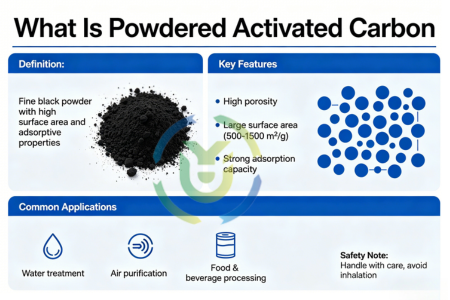
Powdered activated carbon (PAC) is a kind of activated carbon product with fine particle size and good dispersion. Its particle size range is strictly controlled, so it can be quickly dispersed in wastewater and fully contact with pollutants. Compared with granular activated carbon (GAC), powdered activated carbon has smaller particle size and larger specific surface area, and its core feature is that it has a very high specific surface area (usually 900-1100m²/g), which provides sufficient adsorption sites, and can efficiently adsorb organic pollutants, such as phenol, in wastewater, and it is a kind of highly efficient adsorption material.
Powdered activated carbon is produced from a wide range of raw materials, and common raw materials include coal, wood, coconut shells, and agricultural wastes such as zinnia wood. Different raw materials will directly affect the performance of powder activated carbon: coal-based powder activated carbon has the characteristics of uniform pore size distribution and large adsorption capacity, which is suitable for the treatment of high-concentration phenol wastewater; coconut shell-based powder activated carbon has a developed microporous structure and high specific surface area, which is excellent for the adsorption of low-concentration phenol; agricultural waste-based powder activated carbon is environmentally friendly, low-cost advantages, and it is a hot spot of the research in recent years. The selection of raw materials needs to be optimized according to the specific working conditions of wastewater and treatment needs.
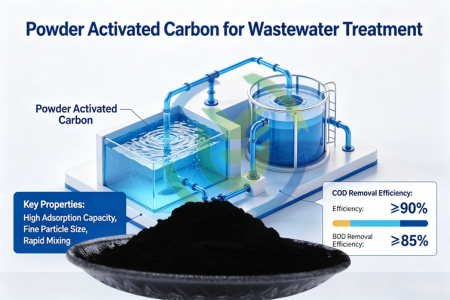
Adequate specific surface area provides a large number of adsorption sites for phenol molecules, which can significantly improve the adsorption efficiency. The specific surface area of conventional PAC is usually 900-1100m²/g, which lays the foundation for efficient adsorption.
The pore size of PAC is concentrated in 0.5-2nm, which is highly compatible with the size of phenol molecules, and is the main place to capture phenol molecules, and the degree of development of microporous structure directly determines the adsorption effect.
The adsorption capacity of conventional PAC for phenol ranges from 120-250mg/g, the specific value depends on the microporous structure and the type of raw material, and the difference in the adsorption capacity of different types of PAC can be adapted to meet the needs of different concentrations of phenol wastewater treatment.
In the process of wastewater treatment, PAC can adsorb with phenol molecules in a short period of time, usually more than 80% phenol removal rate can be realized in the initial 10 minutes, suitable for rapid treatment and emergency scenarios.
PAC itself is non-toxic, stable in nature, does not produce secondary pollution, and can be perfectly compatible with the existing wastewater treatment system, without the need for large-scale modification of existing equipment, reducing the application threshold.
The core role of powdered activated carbon to remove phenol is adsorption, mainly including physical adsorption and chemical adsorption two mechanisms, and the two mechanisms work together to enhance the adsorption effect. Physical adsorption mainly relies on van der Waals force, that is, the intermolecular force between the molecules on the surface of PAC and the phenol molecules, this adsorption is reversible and does not need to consume energy, which is the main form of adsorption; chemical adsorption is through the functional groups on the surface of the PAC and phenol molecules undergo a chemical reaction, the formation of a stable chemical bond, the adsorption is irreversible, which can further enhance the stability and depth of adsorption; In addition, the aromatic structure on the surface of PAC and the aromatic ring of the phenol molecule will produce a strong π-π interaction, which further enhances the adsorption capacity, which is also an important reason for the high efficiency of adsorption of phenol by PAC.
The pore size distribution of powdered activated carbon has a decisive influence on the phenol adsorption effect, in which the micropores (pore size 0.5-2 nm) are the main places for adsorption of phenol molecules. The size of phenol molecules is highly matched with the size of micropores, which can smoothly enter the interior of micropores and be captured by the adsorption sites on the surface of PAC; while mesopores and macropores mainly play the role of channels, which facilitates the rapid diffusion of phenol molecules into the interior of micropores and enhances the adsorption rate. In addition, the size of the pore volume of the micropore also affects the adsorption capacity, the larger the pore volume, the more phenol molecules can be accommodated, the better the adsorption effect; if the pore diameter is too large, it will lead to a decrease in the number of adsorption sites and a decrease in the adsorption capacity; if the pore diameter is too small, it is difficult for the phenol molecules to enter the pore, and it will also affect the adsorption efficiency.
The interaction between phenol molecules and the surface of powdered activated carbon is mainly reflected in three aspects: first, hydrophobic effect, phenol molecules have hydrophobicity, while the surface of PAC is nonpolar, the two will produce hydrophobic attraction, which will prompt the phenol molecules to the surface of the PAC aggregation; the second is the effect of surface charge, the nature of the charge of the surface of the PAC with the change in the pH value of the wastewater, which affects the electrostatic interaction with phenol molecules, when the pH value is in the appropriate range, the PAC surface is not affected, but it will be affected by the electrostatic effect. value is in the appropriate range, the electrostatic repulsion between PAC surface and phenol molecules is the smallest, and the adsorption efficiency is the highest; Third, the adsorption model fitting, the adsorption process of PAC on phenol is in line with the adsorption model of Freundlich and Langmuir and the kinetic behavior is in line with the pseudo-secondary kinetic model, which provides a theoretical basis for optimizing the adsorption conditions and calculating the adsorption capacity for the practical engineering applications. This provides a theoretical basis for optimizing the adsorption conditions and calculating the adsorption capacity in practical engineering applications.
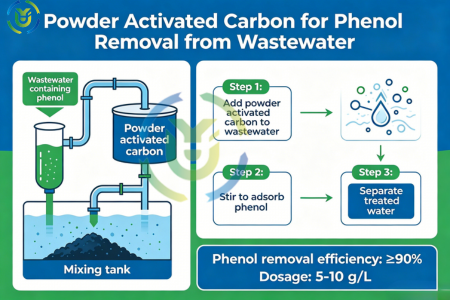
PAC dosage is one of the core factors affecting the removal efficiency of phenol, and there is an obvious positive correlation between the two: within a certain range, with the increase of PAC dosage, the removal rate of phenol is gradually increased, which is due to the increase of the dosage, the adsorption sites increase, and the phenol molecules in the wastewater can be more adequately adsorbed; however, when the dosage reaches a certain value, the improvement of the rate of removal will be slowed down, and the phenomenon of diminishing marginal benefit occurs, which is the most important factor in the removal efficiency of phenol. However, when the dosage reaches a certain value, the rate of removal will slow down significantly, and the phenomenon of diminishing marginal benefit will occur. Therefore, the optimal dosage should be determined through experiments according to the initial concentration of phenol in wastewater and the characteristics of water quality in practical application.
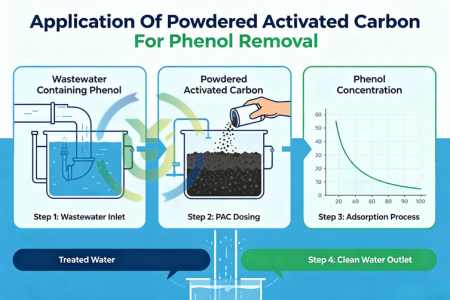
Contact time is an important condition to ensure that the adsorption is fully carried out, which directly affects the phenol removal efficiency and the adsorption equilibrium. The adsorption process of powdered activated carbon on phenol is divided into a fast adsorption stage and a slow equilibrium stage, the fast adsorption stage mainly occurs in the initial stage of the contact between PAC and wastewater, phenol molecules are quickly captured by the adsorption sites on the surface of the PAC, and the removal rate is rapidly increased; with the prolongation of the contact time, the adsorption sites become saturated, and the adsorption rate slows down to reach the final adsorption equilibrium. Under normal circumstances, the contact time between PAC and phenol-containing wastewater is 20-60 minutes to reach the adsorption equilibrium, at which time the phenol removal rate tends to stabilize. In addition, the adsorption kinetic study showed that the adsorption of phenol by PAC was in accordance with the pseudo-secondary kinetic model, and the correlation coefficient R²>0.98, which indicated that the adsorption process was mainly controlled by chemisorption.
The pH of wastewater affects the adsorption efficiency by influencing the surface charge properties of PAC and the morphology of phenol molecules. Experiments show that the optimal pH range of PAC for removing phenol is 5-7, at this time, phenol mainly exists in the form of molecules, and the charge on the surface of PAC and phenol molecules have the smallest electrostatic repulsion, the adsorption effect is optimal; when the pH value is lower than 3 or higher than 9, the wastewater is in a strongly acidic or alkaline environment, the phenol molecules will dissociate, and the nature of the charge on the surface of PAC will change, and the electrostatic forces between the two will change, and the adsorption process will be controlled by chemosorption. When the pH value is lower than 3 or higher than 9, the phenol molecules will dissociate and the surface charge property of PAC will change, and the electrostatic repulsion between the two will be enhanced, resulting in a significant decrease in the adsorption efficiency. Therefore, in the actual treatment process, the pH value of wastewater should be adjusted to ensure that it is in the optimal range.
The effect of temperature on the adsorption of phenol by PAC is mainly reflected in the thermodynamic properties, and the adsorption process of phenol by PAC is a spontaneous, exothermic reaction (Gibbs free energy δG° is negative, and enthalpy change δH° is negative). This means that the lower the temperature, the higher the adsorption capacity and the better the adsorption efficiency; with the increase of temperature, the molecular thermal movement is intensified, and the phenol molecules are more likely to be desorbed from the surface of the PAC, resulting in a decrease in the adsorption capacity and a decrease in the removal efficiency. Therefore, in practical engineering applications, no additional heating, room temperature conditions can achieve better adsorption results, if the wastewater temperature is high, appropriate cooling measures can be taken to enhance the adsorption efficiency.
The initial concentration of phenol in wastewater has an important influence on the adsorption effect and the saturation time of PAC. When the initial concentration is low, the adsorption sites of PAC are sufficient to adsorb the phenol molecules quickly, the removal rate is high, and the time to reach the adsorption saturation is long; when the initial concentration is high, the adsorption sites of PAC will be occupied quickly, and the time to reach the adsorption saturation is shortened, and the insufficient dosage of PAC will lead to the decrease of the removal rate. It is worth noting that PAC has good effect on both low concentration (μg/L level) and high concentration (up to 5000mg/L) of phenol wastewater, only the high concentration of wastewater requires higher PAC dosage and longer contact time, and multi-stage adsorption process can be used if necessary.
The main removal methods for phenol in wastewater include biological treatment, advanced oxidation technologies (AOPs), membrane filtration and PAC adsorption, and the applicable scenarios, treatment effects and core features of each method are compared as shown in the table below:
|
Removal Methods |
Applicable Scenarios |
Connection with PAC |
|
Biological Treatment |
Low concentration, biodegradable phenol wastewater |
PAC can synergize with it to improve system processing efficiency and make up for its processing deficiencies. |
|
Advanced oxidation technologies (AOPs) |
Emergency treatment of small-scale, highly concentrated phenol wastewater |
PAC is low cost and easy to operate, making it more suitable for large-scale industrial applications. |
|
Membrane filtration |
Separation of suspended particles and macromolecules in water |
PAC can be combined with other methods to remove dissolved phenol, reduce membrane contamination, and extend membrane life. |
|
PAC Adsorption |
Low-concentration, high-concentration phenol wastewater, conventional treatment and emergency treatment |
Core treatment method, can be used in conjunction with other methods. |
Able to respond quickly, suitable for emergency pollution control scenarios such as sudden phenol leakage, efficient removal of phenol can be realized in a short time, and the spread of pollution can be quickly curbed.
No need to carry out large-scale modification of existing wastewater treatment equipment, it can be directly added to the existing treatment system, flexibly adapting to different treatment scales and lowering the threshold of application.
The removal effect of low concentration phenol is outstanding, and it can be used as a polishing process for deep treatment to effectively reduce the residual phenol in wastewater and ensure that the wastewater meets the discharge standard.
Suitable for high concentration phenol wastewater treatment, through optimizing the dosage and process parameters, it can achieve more than 99% phenol removal rate, and the treatment effect is stable and reliable.
It can be coupled with biological treatment, membrane filtration and other technologies to form a synergistic treatment effect, improve the overall treatment efficiency, and at the same time, reduce the problems of membrane pollution and optimize the performance of the treatment system.
PAC adsorption technology also has certain limitations, mainly focused on three aspects: First, it will produce a large amount of sludge, PAC adsorption of phenol will form carbonaceous sludge, the sludge disposal is difficult, and the disposal cost is higher, if not handled properly, it may cause secondary pollution; Second, it is difficult to regenerate, adsorption saturation of PAC is difficult to regenerate, even if the use of high temperature, chemical regeneration methods, regeneration cost is also high, and the regeneration cost of the regeneration of PAC is also high, and the regeneration of PAC after the adsorption. Is also high, and regeneration of PAC adsorption capacity will be significantly reduced, it is difficult to achieve large-scale promotion and application; Third, the long-term application of high cost, for large-scale, continuous wastewater treatment scenarios, the need to continue to add PAC, long-term will produce high pharmaceutical costs, need to optimize the amount of dosage, coupled with other processes and other ways to reduce costs.
Selection of powdered activated carbon suitable for phenol removal, need to focus on five core indicators, these indicators directly determine the adsorption performance of PAC: First, the iodine value, the iodine value is an important indicator of the adsorption capacity of PAC, suitable for the removal of phenol PAC, the iodine value range is usually 900-1100mg/g, the higher the iodine value, the greater the adsorption capacity; second, the methylene blue value, this indicator mainly reflects the adsorption capacity of PAC. Blue value, this indicator mainly reflects the adsorption capacity of PAC on organic compounds, the higher the value of methylene blue, the better the adsorption effect on aromatic organic compounds such as phenol; third is the specific surface area (BET), the larger the specific surface area, the more adsorption sites, the higher the adsorption efficiency, the conventional choice of specific surface area of more than 900m ² / g of the PAC; fourth is the ash content, the lower the ash content, the higher the purity of the PAC, the more stable the adsorption performance, avoiding ash content, the higher the adsorption performance, the more stable the adsorption performance, the more stable the adsorption performance, to avoid the adsorption performance. The lower the ash content, the higher the purity of PAC, the more stable the adsorption performance, to avoid impurities in the ash to affect the adsorption effect; Fifth, the particle size distribution, the smaller the particle size, the better the dispersion of PAC, the larger the contact area with the wastewater, the faster the rate of adsorption, but the particle size is too small, will increase the subsequent filtration difficulty, according to the actual treatment process to select the appropriate range of particle size.
The performance of different types of powdered activated carbon varies greatly, so it is necessary to choose the appropriate type according to the concentration of phenol in the wastewater and the characteristics of the water quality: coal-based PAC has a large adsorption capacity and strong stability, suitable for the treatment of high-concentration phenol wastewater, and the cost is relatively low, which is the most widely used type for industrial applications; cocoanut-based PAC has a well-developed microporous structure, high specific surface area, and excellent adsorption effect on low-concentration phenol, suitable for deep treatment as a polishing agent, and it is suitable for deep treatment. excellent and suitable as a polishing process for deep treatment; agricultural waste-based PAC (e.g., Zingiber officinale-based) has the advantages of environmental protection and low cost, and the adsorption performance can also meet the demand for conventional phenol removal, which is suitable for scenarios with high environmental protection requirements and cost sensitivity. In addition, no matter which type of PAC is chosen, priority should be given to products with optimized microporous structure and stable adsorption capacity to ensure the treatment effect.
Since the water quality of different industrial wastewaters varies greatly, and phenol concentration, pH value, and coexisting pollutants will all affect the adsorption effect of PAC, it is necessary to carry out laboratory tests and pilot tests before actual application, to avoid the poor treatment effect caused by improper selection of PAC. Laboratory tests are mainly used to determine the optimal PAC dosage, contact time, pH value and other process parameters, and screen out the PAC type suitable for the wastewater; pilot test is in the actual wastewater treatment scenario, to verify the feasibility of the laboratory parameters, simulate the actual operating conditions, optimize the details of the process, and at the same time, assess the actual adsorption effect of the PAC, the amount of sludge generated, the treatment cost, etc., to avoid the problems of the large-scale application of PAC. The process has been optimized in detail. Through the laboratory test and pilot test, it can ensure the rationality of PAC selection, improve the treatment effect and reduce the operating cost.
Petrochemical, pharmaceutical, coking, pulp and paper and other key industries that produce phenol-containing wastewater, PAC can be used as the core treatment process or depth treatment process, adapted to different concentrations of phenol-containing wastewater, to ensure that the wastewater reaches the national or industry emission standards, to solve the problem of phenol pollution in industrial production.
When there is an emergency environmental pollution event such as phenol leakage or excessive discharge of industrial wastewater, PAC can be quickly added to the contaminated water body, and by virtue of its rapid adsorption characteristics, it can realize efficient removal of phenol in a short time, curb the proliferation of pollution, and reduce the risk of the environment.
In the multi-stage wastewater treatment system, the addition of PAC in the pretreatment stage can effectively remove phenol and other toxic substances in the wastewater, avoid the toxicity inhibition of microorganisms in the subsequent biological treatment system, and protect the stable operation of the biological system; and the addition of PAC in the polishing stage can further remove the residual phenol in low concentration to ensure that the wastewater meets the standard of discharge.
PAC can be coupled with anaerobic membrane bioreactor (AnMBR) and other biological treatment systems, on the one hand, adsorption of phenol in wastewater to reduce its toxicity to microorganisms, on the other hand, it can alleviate membrane contamination, prolong the service life of the membrane and improve the efficiency and stability of the entire treatment system.
A petrochemical company produces wastewater, phenol initial concentration of up to 5000mg / L, the water quality is complex and contains a variety of organic pollutants, pH fluctuations range of 4-8, conventional biological treatment process can not be reduced to the concentration of phenol emission standards (≤ 0.5mg / L), so the use of PAC adsorption process as a means of depth treatment, to solve the problem of phenol emission standards. Problems.
The treatment process is divided into three steps: firstly, adjust the pH value of the wastewater to 6 (the optimal pH range for PAC to remove phenol); secondly, add coal-based PAC at a dosage of 50g/L, mix well and control the contact time for 40 minutes to ensure that PAC reacts with phenol; finally, remove the adsorbed PAC sludge through the process of sedimentation and filtration to complete the wastewater treatment.
The treatment effect data show that after the wastewater is adsorbed by PAC, the concentration of phenol is reduced from 5000mg/L to 0.3mg/L, and the removal rate reaches 99.94%, which fully meets the emission standards; at the same time, the other organic pollutants in the wastewater are also effectively removed, and the removal rate of COD is increased by more than 30%, which is a stable and reliable treatment effect.
Three key points are summarized in the operation process: First, the optimal process parameters are 50g/L, contact time 40 minutes, pH=6, when the adsorption effect is the best and less sludge production; second, adjusting the pH value to the optimal range, which can effectively enhance the adsorption efficiency of the PAC and reduce the consumption of pharmaceuticals; third, the selection of the PAC is coal-based, which is suitable for the treatment of high-concentration phenol wastewater, taking into account both the effect and the cost. Thirdly, the selection of PAC is coal-based, which is suitable for the demand of high concentration phenol wastewater treatment, taking into account the effect and cost.
Three important insights are drawn from the actual operation: first, the phenol concentration and pH value of wastewater should be monitored regularly, and the PAC dosage should be adjusted dynamically to ensure the stability of the treatment effect; second, the carbonaceous sludge should be disposed of by dewatering and incineration, which can not only avoid the secondary pollution but also realize the resource utilization of the sludge; third, it should be combined with the pre-treatment process to remove the suspended particles in the wastewater, so that it can reduce the loss of PAC and the cost of the treatment. Thirdly, it is combined with pretreatment process to remove suspended particles in wastewater, which can reduce the loss of PAC and lower treatment cost.
According to the scale of treatment, choose the appropriate dosage: intermittent dosage is suitable for small-scale and intermittent wastewater treatment, and continuous dosage is suitable for large-scale and continuous treatment; the dosage should be dynamically adjusted by combining the laboratory test and the actual operation data, so as to avoid insufficient dosage leading to the treatment failing to meet the standard, or excessive dosage increasing the cost and sludge burden.
Optimize the mixing conditions through stirring and aeration to ensure that PAC is uniformly dispersed in wastewater and fully contacted with phenol molecules, avoiding the waste of adsorption sites due to PAC agglomeration; reasonably control the stirring speed and aeration intensity to balance the adsorption efficiency and energy consumption and improve the treatment effect.
The charcoal-containing sludge generated after PAC adsorption of phenol needs to be pre-treated by dewatering, curing, etc., to prevent the phenol in the sludge from dissolving again and causing secondary pollution; when the conditions allow, incineration can be used to realize sludge reduction and resource utilization and reduce the disposal cost.
Through screening the appropriate type of PAC, optimizing the dosage, coupling with biological treatment, membrane filtration and other processes, reduce the cost of pharmaceuticals and operating costs; strengthen the routine maintenance of equipment, reduce equipment failure downtime, improve the processing efficiency, and further control the comprehensive cost.
Regularly monitor the concentration of phenol in wastewater, pH value, PAC residue and other key indicators, and adjust the process parameters in time; regularly check the dosing equipment, mixing equipment, filtration equipment, etc., to ensure that the equipment operates normally, and to avoid affecting the treatment effect and progress due to equipment failure.
Reliable suppliers can provide PAC with uniform quality and stable performance to avoid unstable treatment effect due to fluctuation of specific surface area, pore size distribution, adsorption capacity and other indexes, to ensure that the wastewater continues to meet the discharge standards and to reduce the risk of environmental protection.
The water quality and phenol concentration of phenol-containing wastewater in different industries vary greatly, so reliable suppliers can customize PAC products according to the specific conditions of the wastewater and optimize the process parameters, so as to ensure the treatment effect and reduce the operating costs.
High-quality suppliers will provide a full range of technical support, including laboratory tests, pilot tests, on-site technical guidance, etc., to help enterprises to solve practical problems such as PAC selection, process optimization, equipment commissioning, etc., to ensure the stable operation of PAC adsorption process.
Reliable suppliers have perfect quality system certification, products in line with international standards, can meet the export needs of enterprises; at the same time, have a long-term stable supply capacity, to avoid supply interruptions affecting the enterprise’s production and wastewater treatment progress.
Powdered activated carbon (PAC), with its high specific surface area, strong adsorption capacity, easy operation and other advantages, has become an efficient solution for removing phenol from wastewater, and can flexibly cope with different working conditions such as low concentration and high concentration, and has good compatibility with the existing wastewater treatment system, which is widely used in industrial wastewater treatment, and can effectively solve the problem of phenol pollution.
For enterprises, choosing a reliable PAC supplier and strictly following the best practices is the key to ensure the stable operation of the PAC adsorption process and to achieve the standard discharge of phenol, and at the same time, it can effectively reduce the cost of treatment and help enterprises to realize the green and sustainable development.