With the acceleration of industrialisation and urbanisation, global wastewater treatment is facing serious challenges such as increased pollutant types, concentration fluctuations, emerging pollutants (e.g., perfluorinated and polyfluoroalkyl substances (PFAS), drug residues), etc., and increasingly stringent environmental protection regulations, which are increasing the requirements for wastewater discharge indicators. Against this background, powdered activated carbon, with its unique physicochemical properties, has become an indispensable core material in the modern wastewater treatment system, which can not only improve the treatment efficiency and ensure that the discharge standards are met, but also flexibly adapt to various pollution scenarios, providing efficient solutions for municipal, industrial and emergency wastewater treatment. In this article, we will analyse in detail the characteristics, mechanism, application scenarios and optimal use of powdered activated carbon to help industry practitioners fully grasp the essence of powdered activated carbon in sewage treatment.
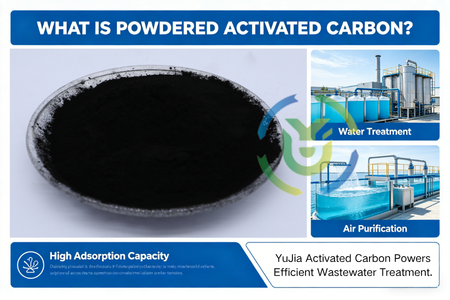


Powdered activated carbon is a kind of fine powdery carbon material made by special activation treatment. Its core characteristic is that it has strong adsorption ability, which can efficiently adsorb all kinds of pollutants in the water, and is widely used in environmental protection fields such as water treatment and waste gas treatment.
Raw materials mainly come from three common materials: coal, coconut shell and wood, and the performance of powdered activated carbon made from different raw materials is slightly different: coconut shell-based powdered activated carbon has better adsorption performance and is suitable for treating low concentration of pollutants; coal-based powdered activated carbon has lower cost and is suitable for industrial large-scale wastewater treatment; and wood-based powdered activated carbon has more environmentally friendly and renewable potential, which is in line with the needs of green development.
The reason why powdered activated carbon can play an outstanding role in wastewater treatment is due to three key characteristics: first, ultra-high specific surface area, the surface area of each gram of powdered activated carbon can reach hundreds to thousands of square metres, forming a large number of adsorption sites, which provides sufficient space for the combination of pollutants; second, strong dual physical and chemical adsorption capacity, which can adsorb pollutants through physical action and lock difficult impurities by chemical combination; third, fine particles, which are suitable for industrial large-scale waste water treatment; and wood-based powdered activated carbon, which has more environmental protection and renewable potential. Third, fine particle size, compared with other carbon materials, powdered activated carbon particles are finer, can quickly react with the pollutants in the sewage and shorten the treatment cycle.
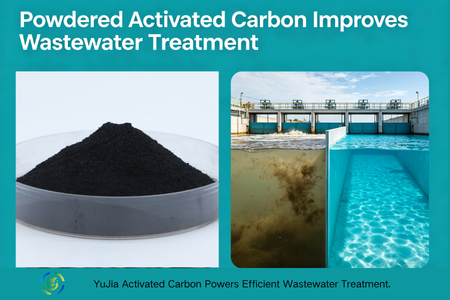
The core principle of powdered activated carbon in sewage treatment is adsorption, which is mainly divided into physical adsorption and chemical adsorption in two forms, and both of them work in synergy to achieve efficient removal of various pollutants. Physical adsorption relies on van der Waals force to adsorb pollutant molecules in sewage to the pores on the surface of powdered activated carbon, this adsorption method does not require chemical reaction, and the operation is mild and reversible; chemical adsorption is through the formation of chemical bonds between powdered activated carbon and pollutants to achieve a firm lock on heavy metals, toxic organics and other difficult to deal with impurities, the adsorption effect is more stable, and it is suitable for the treatment of high toxicity and high concentration of pollutants. The adsorption effect is more stable and suitable for the treatment of highly toxic and highly concentrated pollutants.
By virtue of this double adsorption mechanism, powdered activated carbon can effectively remove a variety of key pollutants in sewage: first, dissolved organic matter, can directly reduce the chemical oxygen demand (COD) and biochemical oxygen demand (BOD) in sewage, improve sewage water quality from the source; second, coloured compounds, this feature is particularly important for the textile industry, can effectively remove dye pigments in printing and dyeing wastewater, to solve the problem of decolourisation of wastewater; Third, odour-causing substances, by adsorbing the odour molecules in the wastewater, to enhance the sensory quality of the effluent, to avoid the impact of odour on the surrounding environment; fourth, toxic chemicals and heavy metals, such as mercury, cadmium, lead, etc., to reduce the potential hazards of pollutants on the ecological environment and human health.
It is worth noting that powdered activated carbon is outstanding in removing emerging pollutants, and can effectively treat trace pollutants such as drug residues, pesticides, PFAS, etc., which are difficult to be captured by traditional wastewater treatment processes. These pollutants are low in concentration, persistent and difficult to remove completely by conventional treatment methods, while the ultra-high specific surface area and strong adsorption capacity of powdered activated carbon can accurately capture and lock these trace impurities, filling the gaps in conventional wastewater treatment, and helping wastewater to reach higher emission standards.
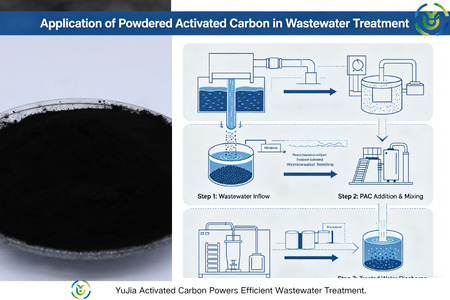
In municipal sewage treatment, powdered activated carbon is mainly used in the depth treatment process, that is, tertiary treatment polishing, to further purify the trace pollutants and organics remaining after primary and secondary treatment, and to ensure that the effluent meets the strict emission standards. At the same time, powdered activated carbon can also supplement the biological treatment of the shortcomings of biological treatment to remove the biological treatment of organic matter difficult to degrade, improve the quality of water, help municipal wastewater reuse, alleviate the pressure of water shortage. For example, the use of powder activated carbon T process (powder activated carbon treatment process) in municipal wastewater treatment can significantly improve the nitrification effect, enhance the feasibility of wastewater reuse, in line with the development trend of wastewater reuse.
As industrial wastewater has complex composition and fluctuating pollutant concentration, powdered activated carbon is suitable for a wide range of industrial scenarios due to its flexible dosing method and wide adsorption range:
In the textile industry, powdered activated carbon can be targeted to remove dye pigments in printing and dyeing wastewater to achieve decolourisation of wastewater and meet the discharge standards; in the pharmaceutical industry, it can effectively adsorb active pharmaceutical ingredients (APIs) and impurities in the production process to avoid environmental pollution caused by drug residues; in the chemical industry, it can adsorb toxic organics and hazardous byproducts to reduce the difficulty of wastewater treatment. In the food and beverage industry, powdered activated carbon removes odours and organic impurities from wastewater and ensures the safety of production water. In addition, in the thick oil wastewater treatment of Liaohe Oilfield, the COD value of thick oil wastewater is successfully controlled to less than 50 milligrams per litre through the new process of ‘two-stage activated sludge + powder activated carbon’, which achieves compliance with the standards for external discharge and provides an excellent example for industrial wastewater treatment.
When there is an unexpected pollution event such as chemical leakage or algae outbreak, or when there is a shock load (a sudden surge in pollutant concentration) in the wastewater system, powdered activated carbon becomes the material of choice for emergency treatment by virtue of its fast response. Its fine particle characteristics can quickly dissolve and adsorb pollutants, without the need for complex equipment debugging, can be quickly added to use, effectively controlling the spread of pollution, reduce the losses caused by sudden pollution. Whether it is the treatment of contaminated groundwater or the emergency treatment of rubbish leachate, powdered activated carbon can play a rapid purification role to buy time for subsequent treatment.
The adsorption speed of powdered activated carbon is fast, usually 15-30 minutes can be close to the adsorption equilibrium, which greatly shortens the treatment cycle, improves the overall efficiency of sewage treatment, and meets the demand of high time treatment.
No need to carry out large-scale transformation of the existing sewage treatment system, can be directly adapted to the existing equipment, the dosage mode is flexible, reducing the cost of system upgrading, especially suitable for the transformation and upgrading of the old water plant.
It can deal with all kinds of impurities from organic matter, heavy metals to emerging pollutants, and can be adapted to sewage with different water quality and concentration, without the need to match with a variety of treatment materials, thus realising one-stop pollution treatment.
For scenarios with large fluctuations in sewage flow and pollutant concentration, batch dosing can be used to avoid the high cost of continuous operation, which is more cost-effective than other treatment processes.
It can effectively reduce the concentration of pollutants in the sewage, help enterprises and water plants to meet the increasingly stringent global environmental regulations, avoid penalties for non-compliance, and at the same time improve the sensory quality of the water.
The addition of powdered activated carbon should be combined with the treatment scene and characteristics of wastewater, and there are three common ways of addition: one is directly added to the aeration tank, and activated sludge synergistic effect, to achieve the synergistic effect of physical adsorption and biodegradation, which is also known as the powdered activated carbon T process, which is widely used in municipal and industrial wastewater treatment, and in the United States it is also known as the AS – powdered activated carbon process, which is effective in the treatment of wastewater, and can effectively improve the quality of water. Powdered activated carbon process, which can effectively improve the removal rate of organic pollutants; secondly, it is added to the contact pool or mixing pool to ensure that the powdered activated carbon and sewage are in full contact, to ensure the adsorption effect, and to avoid incomplete treatment due to uneven mixing; thirdly, it is pre-dissolved and then added, and the dilution ratio needs to be strictly controlled, to avoid the clumping of the powdered activated carbon and to ensure the uniform distribution and to improve the adsorption efficiency.
In terms of process integration, powdered activated carbon can be combined with a variety of wastewater treatment processes to further enhance the treatment effect: combined with coagulation and flocculation processes, it can enhance the settling performance of pollutants and reduce the amount of sludge; integrated with membrane bioreactors (MBR) to form the MBR+powdered activated carbon process, which can effectively remove trace pollutants and improve the quality of effluent, and even meet the standard of wastewater reuse, this integrated process is widely used in the field of wastewater reuse; in addition, the integrated process is widely used in the field of wastewater reuse. This integrated process is widely used in the field of wastewater reuse; in addition, powdered activated carbon can also be combined with the wet air regeneration (WAR) process to achieve regeneration of powdered activated carbon and reduce the cost of treatment. The WAR process can oxidise and decompose pollutants adsorbed by the powdered activated carbon in the high-temperature and high-pressure liquid-phase environment, so as to realise recycling of activated carbon, and at the same time, dissolve the biological sludge, so as to reduce the generation of wastes.
In practical application, according to the sewage flow, pollutant concentration, choose continuous dosing or batch dosing: continuous dosing is suitable for the scene of stable pollutant concentration, batch dosing is more suitable for concentration fluctuation, intermittent treatment needs, and at the same time, attention should be paid to multi-point dosing, to avoid the local concentration of too high leading to corrosion of the equipment or adsorption is not uniform.
Particle size and specific surface area are the core influencing factors – the smaller the particle size, the faster the reaction speed; the larger the specific surface area, the more adsorption sites, the stronger the adsorption capacity. At the same time, the quality indicators of powdered activated carbon (such as salinity, alumina content) will also affect the adsorption capacity, according to the needs of the treatment to choose the appropriate quality of powdered activated carbon.
Contact time, dosage, sewage temperature and pH value are especially critical: insufficient contact time will lead to inadequate adsorption, generally need to ensure sufficient mixing contact time, to ensure that the powdered activated carbon and pollutants fully reacted; the dosage needs to be accurately controlled, if too little will not be completely treated, if too much will increase the cost and the amount of sludge, resulting in a waste of resources; the sewage pH value is controlled at 6-9, and the temperature is 20-30 ℃, the adsorption efficiency of the powdered activated carbon will be the highest. When the pH value of sewage is controlled at 6-9 and the temperature is 20°C, the adsorption efficiency of powdered activated carbon is the highest, and deviation from this range will obviously reduce the adsorption effect.
The type and concentration of pollutants, interfering substances in the water (e.g., silicates, phosphates), and the concentration of suspended solids (SS) all affect the adsorption effect of powdered activated carbon. For example, the interfering substances will compete with the pollutants for adsorption sites and reduce the adsorption capacity of powdered activated carbon; too much suspended solids will wrap the powdered activated carbon particles and hinder the adsorption reaction.
The core difference between the two lies in the form and application scenarios. Powdered activated carbon is fine powder, no fixed bed, flexible dosing, suitable for emergency and intermittent treatment, lower cost but non-renewable (in wastewater application); granular activated carbon is granular, fixed bed filtration is required, renewable and reusable, suitable for long-term continuous treatment, but the investment in equipment and maintenance costs are higher. For example, powdered activated carbon is preferred for emergency pollution treatment, whereas granular activated carbon is more suitable for long-term treatment in large municipal water plants.
Chemical oxidation breaks down pollutants through chemical reaction, while powdered activated carbon locks pollutants through adsorption, so their treatment principles are different. Powdered activated carbon is gentler, does not produce toxic intermediate products, and is suitable for treating low concentration and difficult to degrade pollutants; chemical oxidation is highly efficient, but may produce secondary pollution, and is suitable for rapid treatment of high concentration toxic pollutants.
Membrane filtration mainly removes suspended solids and macromolecule pollutants, and cannot effectively deal with dissolved small molecule impurities; powder activated carbon is good at adsorption of dissolved pollutants and trace impurities, and the two complement each other, often used in conjunction with each other (e.g., MBR+Powder Activated Carbon), to achieve all-round purification.
|
Comparison Dimension |
Powdered Activated Carbon |
Chemical oxidation |
Membrane filtration |
|
Advantages |
Flexible dosing, fast reaction time, suitable for trace pollutants |
High treatment efficiency, suitable for high concentration of toxic pollutants |
Good interception effect, thorough separation |
|
Applicable Scenarios |
Emergency treatment, trace contaminant removal, retrofit of existing systems |
Rapid treatment of highly concentrated toxic pollutants |
Suspended solids, large molecule contaminants removal |
Overall, when it comes to emergency treatment, trace pollutant removal, modification of existing systems and other scenarios, powdered activated carbon is the preferred solution, and its flexibility and adaptability far exceeds that of other technologies.
The adsorption of pollutants by powdered activated carbon results in the formation of carbon-containing sludge, which needs to be properly disposed of, increasing the complexity and cost of sludge treatment, which is a key issue to be addressed in the powdered activated carbon T process.
Long-term continuous treatment requires continuous dosing of powdered activated carbon, and there is pressure on logistics supply and cost control, especially for high-concentration wastewater, the cost will rise significantly when the dosage is large.
Powdered activated carbon is usually non-renewable in wastewater applications, which increases the amount of waste generated when compared to granular activated carbon, although regeneration can be achieved through the WAR process to alleviate this problem.
There are some risks during operation, such as uneven dosing due to clumping of powdered activated carbon, corrosion of equipment due to locally high concentrations, or problems with foam formation and excessive aluminium residues, which require enhanced process control.
Determine the optimal dosage for specific wastewater through small and pilot tests to avoid under- or over-dosage and balance the treatment effect and cost. For example, before the treatment of industrial wastewater, the optimal type, dosage and contact time of powdered activated carbon can be determined through laboratory-scale small trials, which provide the basis for industrial application.
Pre-dissolve the powdered activated carbon, control the dilution ratio, avoid agglomeration, ensure that the powdered activated carbon is uniformly distributed in the wastewater, and improve the adsorption efficiency; at the same time, dissolve the powdered activated carbon and the PAM (polyacrylamide) separately, avoiding mutual interference between the two and affecting the treatment effect.
Regularly test the quality of effluent water, adjust the dosage and contact time according to the change of pollutant concentration, ensure the adsorption efficiency of powdered activated carbon is stable, and find and solve the problems of insufficient adsorption and equipment corrosion in time.
Combine powdered activated carbon with coagulation, flocculation, membrane filtration, biological treatment and other processes to achieve synergistic effect, for example, powdered activated carbon T process is the combination of powdered activated carbon and activated sludge method, which can give full play to the synergistic effect of physical adsorption and biodegradation to enhance the treatment effect; for high concentration organic wastewater, it can be combined with WAR process to achieve the regeneration of powdered activated carbon to reduce costs.
Control the pH value of sewage and use corrosion inhibitor to avoid corrosion of equipment caused by powdered activated carbon and prolong the service life of equipment.
The control of trace pollutants such as PFAS and drug residues is continuously strengthened in various countries, which promotes the popularity of powdered activated carbon in deep treatment and makes it the core material for deep sewage treatment.
Automated dosage and real-time monitoring system will be gradually promoted to achieve precise control of dosage, improve treatment efficiency, reduce labour costs and promote intelligent upgrading of sewage treatment.
The use of agricultural by-products and other wastes to prepare powdered activated carbon reduces the environmental impact, fits the concept of green environmental protection development, and promotes the transformation of the powdered activated carbon industry to low-carbonisation.
For example, MBFB membrane biofluidised bed process combines the adsorption effect of powdered activated carbon, microbial degradation and membrane separation to achieve deep purification and reuse of sewage and promote the resourceful use of sewage.
Stricter environmental regulations will further promote the popularisation and application of powdered activated carbon, especially in the field of industrial wastewater treatment and municipal wastewater reuse, powdered activated carbon will become the core material to meet the emission standards, at the same time, the integrated processes such as powdered activated carbon T, MBR+powdered activated carbon and so on will be optimised continuously to improve the treatment stability and economy.
With its core advantages of rapid adsorption, flexible dosing, and wide applicability, powdered activated carbon plays an irreplaceable role in various wastewater treatment scenarios, such as municipal, industrial, and emergency, not only solving trace pollutants and difficult-to-degrade impurities that are difficult to be treated by traditional processes, but also adapting to the existing treatment system to help enterprises and water plants to reduce the cost of treatment and ensure compliant discharge. With the continuous upgrading of technology, the sustainability and treatment efficiency of powdered activated carbon will be further improved, and combined with best practice methods, it can maximise its application value, provide reliable solutions to global wastewater treatment challenges, and contribute to the high-quality development of environmental protection.