Water is the source of life. Whether it is living drinking water, industrial production water or waste water treatment, water purification is the core link to protect health and promote production. Among many water treatment technologies, activated carbon has become one of the most widely used and reliable purification materials worldwide due to its excellent adsorption properties.
It can efficiently remove organic pollutants, harmful chemicals, microplastics and other impurities in water, taking into account the purification effect and long-term stability, and plays an irreplaceable role in many scenarios, such as drinking water purification and industrial wastewater treatment. In this article, we will comprehensively analyse the core role of activated carbon in water treatment, working principle, type division, practical application and selection skills, to help you thoroughly read the purification value of activated carbon.
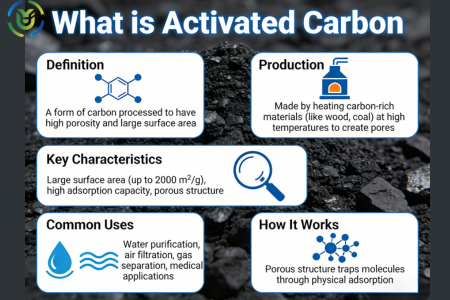
Activated carbon is a kind of porous carbon material after special processing, and its core feature is that it has huge specific surface area and rich microporous structure, which is also the key to its strong adsorption ability. Its raw materials come from a wide range of sources, commonly coconut shell, wood, bituminous coal and other natural materials, after high-temperature carbonisation and activation treatment, to form a special carbon form with strong adsorption properties.
The activation process of activated carbon is the core step in the formation of its porous structure: the raw materials are carbonised at high temperatures to remove impurities and volatile components, and then activated by steam or chemical reagents to form a large number of tiny pores in the carbon molecular structure. The diameter of these pores is usually between a few nanometres and tens of nanometres, which greatly increases the internal surface area of the activated carbon – 1 gram of high-quality activated carbon can have a surface area of 900-1200 square metres, which is equivalent to the size of a standard football pitch.
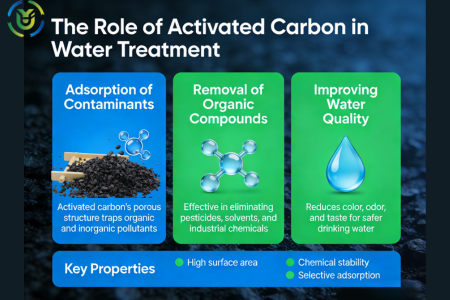
The essence of its working principle is ‘adsorption’: the microporous structure of activated carbon has a strong adsorption force, when the water flows through the activated carbon, the pollutant molecules in the water will be adsorbed by the microporous adsorption, retention, so as to separate from the water, and realise the purification of water quality. This adsorption process does not require chemical reaction, high efficiency and does not produce secondary pollution, can widely remove a variety of harmful substances in the water.
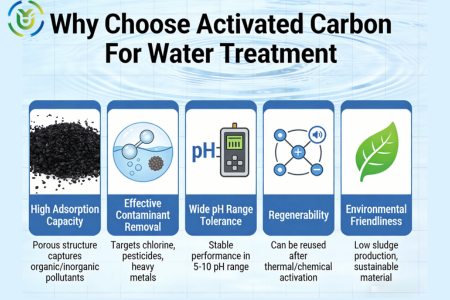
In many water treatment purification materials, activated carbon can become the first choice, the core lies in its unique advantages of adaptability, whether it is the purification effect, applicable scenes or long-term use of the cost, have significant advantages:
Firstly, the adsorption capacity is strong and comprehensive. Activated carbon can efficiently capture organic compounds, harmful chemicals and micro-pollutants in water, and can effectively remove even low concentrations of impurities, avoiding the problem of ‘treating the symptoms but not the root cause’ in traditional purification methods.
As mentioned above, the microporous structure of activated carbon has an amazing specific surface area, and the unit mass of activated carbon can adsorb a large number of pollutants, and the purification speed is fast, so it can meet the needs of water treatment in different scenarios.
Whether it is the deep purification of drinking water, the pretreatment of industrial production water, or the standard treatment of industrial wastewater, activated carbon can play a good purification effect, without the need for frequent replacement of purification materials according to the scene.
Activated carbon has stable adsorption performance, long service life, convenient replacement, reasonable cost, and no secondary pollution in long-term use, which not only guarantees the safety of water quality, but also reduces the comprehensive cost of water treatment.
The purification effect of activated carbon is not a general ‘water purification’, but for different pollutants with a clear removal ability, the following is the purification effect of common pollutants in the water in detail, the data are from the actual application verification:
Pesticides used in agricultural production will enter freshwater sources such as rivers, ponds and groundwater through rainfall and soil infiltration, and even after conventional water treatment, there may still be residues that enter tap water. Activated carbon can effectively remove 14 clearly identified pesticides, including chlordane, lindane, chlordecone, etc., avoiding the hazards of pesticide residues on human health from the source.
In order to kill bacteria and viruses in tap water, municipal water supply usually adds chlorine for disinfection, but chlorine will change the taste and odour of tap water and make people feel uncomfortable. Activated carbon filter can remove more than 95% of chlorine in water, completely improve the taste and smell of tap water, and make drinking water more refreshing.
In the process of chlorine disinfection, it will react with organic substances in the water to generate by-products, among which substances such as trihalomethanes (THMs) are considered to have potential carcinogenic risk, which is an important hidden danger for tap water safety. Compared to other purification technologies, activated carbon is the most effective way of removing chlorine by-products. According to the US Environmental Protection Agency (EPA), activated carbon can remove up to 32 chlorine by-products, significantly improving drinking water safety.
Nitrate is an essential nutrient for plant growth, which is harmless to human body, but when the nitrate content in water is too high, it will trigger methemoglobinemia (commonly known as ‘Blue Baby Disease’), which will lead to the lack of oxygen in human body, and it is especially harmful to infants and young children. Activated carbon can reduce the nitrate content in water by 50-70%, keeping it within safe limits.
In recent years, microplastic pollution has become a global environmental problem. These plastic fragments, which are invisible to the naked eye, will enter fresh water sources through various ways, and long-term intake will cause potential harm to human health. Activated carbon filters can completely intercept and remove microplastics from water to prevent them from entering the human body.
Chloride is not directly harmful to human health, and is an important substance for maintaining human blood pressure and pH balance of body fluids. However, when the content of chloride in water is too high, it will make the water salty and affect the drinking experience. Activated carbon can reduce the chloride content in water by 50%-70%, effectively eliminating the salty taste of water without affecting the beneficial effects of chloride.
Per- and polyfluoroalkyl substances (PFAS) are a class of synthetic chemicals widely used in metal plating, antifouling agents, firefighting foams, etc. They have been present in the environment and water sources for a long period of time and are toxic to mammals. Activated carbon can effectively remove PFOS, PFOA, PFNA and many other PFAS substances in water to ensure the safety of drinking water.
Herbicides (commonly known as ‘weed killers’) are used to control the growth of weeds, but their residues can enter the water supply and cause harm to human health and the ecosystem. Activated carbon can efficiently remove 12 common herbicides, including atrazine, 2,4-drop, etc., completely removing herbicide residues from water.
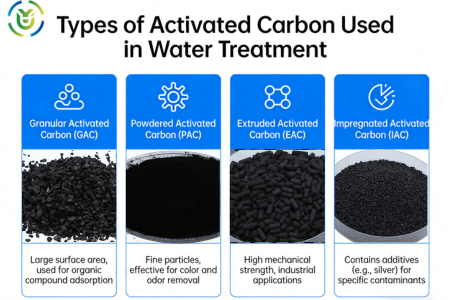
Activated carbon made of different raw materials and processing technology has different pore structure and adsorption performance, and is suitable for different water treatment scenarios. At present, activated carbon commonly used in the field of water treatment is mainly divided into four categories, each with clear advantages and applicable scenarios:
Coconut shell-based activated carbon is made from coconut shells through high-temperature carbonisation and steam activation, and is one of the most widely used types of activated carbon in the water treatment field. Its core features are high density, high hardness and rich microporous structure, especially good at adsorbing small molecule pollutants.
In water treatment, coconut shell-based activated carbon has excellent removal effects on pollutants such as chlorine, chloramines, volatile organic compounds (VOCs), tannins, humic acid, etc., of which tannins and humic acid are the main causes of yellowish water colour and odour.
Its production process is environmentally friendly and highly efficient. Coconut shell, as a natural raw material, is highly renewable, and after high-temperature carbonisation and steam activation, the microporous structure formed is uniform and the adsorption performance is stable. Common application scenarios include household terminal water purification (e.g., water purification kettles, under-counter filters), municipal drinking water treatment plants, etc., which can meet the needs of small-flow water purification at home, and can also be adapted to large-scale water treatment scenarios.
Coal-based activated carbon is made from bituminous coal through controlled carbonisation and physical/chemical activation. Its core feature is the wide distribution of pore sizes, including micropores as well as mesopores and macropores, which are capable of adsorbing a wide range of pollutants with different molecular weights.
Compared with other types, coal-based activated carbon is particularly effective in the adsorption of heavy metals (e.g., lead, mercury, cadmium, etc.), as well as highly efficient in the removal of hydrophobic organic compounds, chlorine disinfection by-products, and so on. Heavy metals are the main pollutants in industrial wastewater and some groundwater, and long-term intake can cause serious harm to human kidneys and nervous system. This advantage of coal-based activated carbon makes it the first choice for industrial water treatment.
Its mature production process and relatively low cost make it suitable for large-scale industrial applications. Common application scenarios include residential whole-house water purification systems, industrial wastewater treatment plants, commercial water purification facilities, etc., which can meet the needs of water treatment with large flow and high pollution load.
Wooden activated carbon is made from wood chips, wood and other raw materials through high-temperature pyrolysis and activation, and its core features are large pore size, good at adsorbing macromolecular organic pollutants and high adsorption capacity.
In water treatment, wood activated carbon is mainly used to remove colour and odour compounds in water, as well as large-molecule organic pollutants – such pollutants are often difficult to be effectively adsorbed by other types of activated carbon, while the large pore size structure of wood activated carbon can easily retain such substances.
It is produced from a wide range of raw materials, with relatively simple processing and moderate costs. Common application scenarios include industrial wastewater treatment (especially decolourisation and deodorisation of wastewater in industries such as printing and dyeing and papermaking), and odour removal in household water purification systems, etc. It is suitable for scenarios with a clear demand for the removal of macromolecular pollutants.
Catalytic activated carbon is a kind of modified activated carbon. On the basis of traditional activated carbon, its catalytic performance is enhanced by impregnating catalytic reagents such as metals or metal oxides, which not only adsorbs pollutants, but also decomposes pollutants through chemical reactions, resulting in more thorough purification effects.
Its core advantage is the excellent removal of stubborn pollutants such as chloramine, hydrogen sulphide and trihalomethanes (THMs) – chloramine is a long-lasting disinfectant commonly used in municipal water supply, which is difficult to be removed by ordinary activated carbon; hydrogen sulphide will make the water produce a ‘rotten egg smell’, which affects the drinking experience; THMs will affect the drinking experience; and the water will have a ‘rotten egg smell’. THMs are potential carcinogens, and catalytic activated carbon can decompose them through catalytic reaction, completely eliminating the hidden dangers.
The production process is relatively complex and the cost is higher than ordinary activated carbon, but the purification effect is more outstanding. Common application scenarios include whole-house water purification systems, commercial water purification facilities, and water treatment scenarios with strict requirements for chloramine removal.
With its excellent adsorption performance and versatility, activated carbon has been widely used in water treatment in life, municipal, industrial and other fields, covering water purification, wastewater treatment, emergency water purification and other scenarios, as follows:
This is the closest application scenario of activated carbon in daily life. Activated carbon cartridges are used in household terminal water purification (e.g. water purification kettles, under-counter filters, faucet filters) and whole-house water purification systems to remove chlorine, odour, pesticide residues, microplastics and other pollutants in tap water, improve the taste and safety of drinking water, and safeguard the health of drinking water for the family.
Currently, most municipal drinking water treatment plants around the world incorporate activated carbon into the purification process. After conventional precipitation, filtration and disinfection, the residual organic pollutants, chlorine by-products and odours in the water are removed through activated carbon adsorption, which further improves the quality of tap water, ensures the safety of water supply, and meets the needs of residents for drinking water.
In the process of industrial production, activated carbon plays an important role in both the pretreatment of production water and the treatment of wastewater to meet the standards. In the pre-treatment of production water, activated carbon can remove impurities, heavy metals and organic pollutants in water to avoid corrosion and blockage of production equipment and to ensure normal operation of production; in the treatment of industrial wastewater, activated carbon can adsorb hazardous pollutants, heavy metals, dyes, etc. in the wastewater, so that the wastewater can meet the national emission standards and then be discharged or recycled, thus reducing the pollution of the environment.
The water in aquariums and fish tanks needs to be kept clean and free of toxins in order to safeguard the survival of fish and other aquatic organisms. Activated carbon is widely used in aquarium filtration equipment to remove toxins, organic waste, odours, etc. from the water to maintain water clarity, create a healthy aquatic environment, and reduce the incidence of fish diseases.
In the production process of bottled water, fruit juice and beverages, water quality directly affects product quality and taste. Activated carbon filtration is the core purification process in this industry, removing impurities, odours and taste-interfering substances in the water to ensure pure taste, stable quality and consumer satisfaction.
Swimming pool and spa water is usually disinfected with chlorine, which tends to produce chloramines and other by-products, resulting in yellowish water colour and odour, as well as skin and eye irritation. Activated carbon removes chloramines, volatile organic compounds and other pollutants from the water, improving water quality, reducing skin and eye irritation and enhancing the swimming and spa experience.
In emergency scenarios such as natural disasters (e.g. floods, earthquakes) or outdoor adventures, drinking water sources may be contaminated and not directly drinkable. In portable emergency water purification equipment (such as water purification bags and water purification jugs), activated carbon is the core purification component, which can quickly remove impurities and pollutants in the water, so that the water meets the drinking standard and protects the personnel’s drinking water safety.
Different scenarios, different water quality needs, different requirements for activated carbon, blind selection will lead to poor purification effect, the use of cost increases. The following 6 core indicators are the key to choosing activated carbon for water treatment, which can be easily mastered by novices:
The particle size of activated carbon directly affects the water flow rate and filtration effect. You should choose activated carbon with uniform particle size to ensure stable water flow rate and avoid ‘ditch flow’ (water flow bypassing the activated carbon layer) or clogging of the cartridge; avoid choosing products with mixed particle sizes, or it will affect the purification efficiency and service life.
Ash is an impurity component in activated carbon. The higher the ash content, the lower the purity of activated carbon, the worse the adsorption performance, and it is easy to lead to scaling and clogging of the filter element. It is recommended to choose activated carbon with less than 5% ash content to ensure the adsorption effect and prolong the service life of the cartridge.
Surface area is the core index that determines the adsorption capacity of activated carbon, the larger the surface area, the higher the adsorption capacity and the better the purification effect. The surface area of high-quality activated carbon for water treatment should be between 900-1200 square metres/gram, and the pore structure is uniform and rich.
Iodine value is a standard indicator of the adsorption capacity of activated carbon, the higher the iodine value, the stronger the adsorption performance of activated carbon. For water treatment scenarios, the ideal iodine value of activated carbon should be 1000 mg/g and above, which can meet the removal needs of most pollutants.
Stacking density affects the amount of activated carbon that can be loaded, the design of the cartridge, and the cost of use. Stacking density varies among different types of activated carbon, with coconut shell-based granular activated carbon (GAC) having an ideal stacking density of 0.45-0.55 g/cm3 , which is suitable for most domestic and small commercial water purification equipment.
To safeguard water quality, especially activated carbon for drinking water treatment, it is important to choose a product that meets the relevant certification standards. Common certification standards include the American Water Works Association (AWWA) standards, the International Organisation for Standardisation (ISO) standards, etc., to ensure that the activated carbon does not precipitate harmful substances and meets the requirements for drinking water purification.
Q1: How good is the purification effect of activated carbon in water treatment?
A1: The purification effect of activated carbon depends on the type of pollutants, type of activated carbon and the use scene. In general, it can efficiently remove organic pollutants, chlorine, odour, pesticides, microplastics, etc., and the removal rate of chlorine can be more than 95%, and that of chlorine by-products can be more than 80%, and that of nitrate can be 50%-70%, which is one of the most effective water treatment and purification materials at present. It is one of the most effective materials for water treatment.
Q2:Can activated carbon remove all pollutants in water?
A2: No. The core advantage of activated carbon is adsorption. The core advantage of activated carbon is the adsorption of organic pollutants and some inorganic pollutants, and the removal of dissolved minerals (such as calcium and magnesium ions, i.e., limescale) and some heavy metals (which require a specific type of activated carbon) in water has a limited effect. If you need to remove such pollutants, you need to combine with other water treatment technologies such as reverse osmosis and ion exchange.
Q3: How long does the activated carbon in a water treatment system last?
A3: The service life of activated carbon depends on the water flow rate, the degree of water contamination, the type of activated carbon and the loading capacity. Generally speaking, the service life of activated carbon in household water purification cartridges is 6-12 months, and the service life of activated carbon in industrial and municipal water treatment is 1-3 years. When it is found that the taste of the water becomes worse and the odour is obvious, the activated carbon needs to be replaced in time.
Q4: Is it safe to use activated carbon for drinking water treatment?
A4: Safe. As long as you choose activated carbon that complies with AWWA, ISO and other relevant certification standards, there is no harmful substance precipitation, and it can effectively remove harmful pollutants in the water without secondary pollution. Activated carbon is a globally recognised, safe and reliable drinking water purification material, widely used in household and municipal drinking water treatment.
As an efficient, universal and safe adsorption material, activated carbon is irreplaceable in the field of water treatment, widely used in household, municipal, industrial and emergency water purification and other scenarios, by virtue of its large specific surface area and strong adsorption, it can effectively remove a wide range of pollutants and ensure the safety of water quality.
By choosing the right type of activated carbon and controlling core indicators such as particle size, ash content and iodine value, we can maximise the purification effect and reduce costs. In the future, with the upgrading of modification technology, the adsorption performance of activated carbon and applicable scenarios will be further expanded to provide stronger support for water purification.
Whether home users choose water purification equipment, or enterprises, municipal planning water treatment programmes, in-depth understanding of the role of activated carbon and selection techniques, in order to better use this high-quality materials, guarding the safety of drinking water.