As the core adsorption material in municipal wastewater treatment, activated carbon plays an irreplaceable role in purifying water and removing pollutants by virtue of its developed pore structure and excellent adsorption performance. Reasonable selection of activated carbon can not only enhance the efficiency of sewage treatment and ensure that the water meets the standards, but also effectively control the operating costs and avoid waste of resources. This article will focus on municipal wastewater treatment scenarios, systematic combing of activated carbon selection logic, core standards and application strategies, to provide comprehensive, grounded selection reference for sewage industry practitioners.
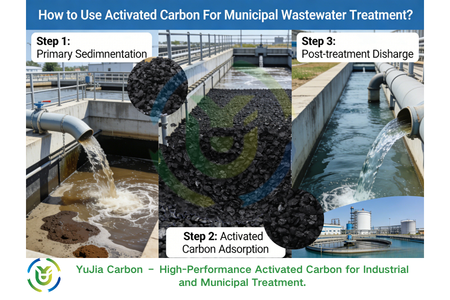
Powdered activated carbon (PAC) is in the form of fine powder, and its application is mainly to be directly added to the biological treatment system to realize adsorption by mixing and contacting with sewage. Its core advantage lies in its strong flexibility and low cost, without complex equipment investment, especially suitable for coping with seasonal pollutant peaks (such as the sudden rise of pollutant concentration due to surface pollution in the rainy season), which can quickly play the role of adsorption and temporarily improve the treatment effect.
Granular activated carbon (GAC) has uniform particles and is mainly used in fixed-bed filters and tertiary deep treatment systems as the core material for deep polishing. Its outstanding features are long service life and regeneration potential, which can be reused after regeneration treatment. It is suitable for long-term and stable deep wastewater treatment scenarios, and is a commonly used material in tertiary treatment of municipal wastewater.
Extruded (columnar) activated carbon is made by the extrusion molding process, and its biggest advantage over other types is the lower pressure drop, which reduces the energy consumption of the wastewater treatment system. This type of activated carbon is mainly used in some special scenarios of municipal wastewater treatment, for the deep removal of specific pollutants, and is suitable for the treatment process that has strict requirements on the pressure drop of the system.
Coal-based activated carbon is the most widely used type of activated carbon in the field of municipal wastewater treatment. It has a large adsorption capacity, can efficiently adsorb many types of pollutants, and is suitable for the complex water quality composition of municipal wastewater. It has high mechanical strength, is not easily broken during the operation of the system such as backwashing, and is highly stable. In addition, the price of coal-based activated carbon is relatively friendly, with low procurement and operating costs, which can meet the economic needs of most municipal wastewater treatment plants, and is suitable for a variety of pollutant removal scenarios.
The pore structure of coconut shell activated carbon is more developed than that of other types, and the number of micropores is large and evenly distributed, which makes its adsorption rate faster and can quickly capture small molecule pollutants in sewage. Its adsorption effect on VOCs, benzene and other small molecule organic pollutants is especially outstanding, with high purification precision. However, due to its raw material cost and more complex production process, the price of coconut shell activated carbon is relatively high, and it is more suitable for deep treatment scenarios with strict requirements on effluent water quality, such as reclaimed water reuse.
The pore distribution of wood-based activated carbon is wide, and the content of mesopores and macropores is relatively high, which makes its adsorption effect on macromolecular pollutants and chromatic substances more excellent, especially suitable for the treatment of municipal wastewater containing macromolecular impurities such as dyes and humus. Its price is between coal-based and coconut shell activated carbon, with moderate cost performance, and it can achieve better decolorization and deodorization effect without excessive investment. Meanwhile, wood-based activated carbon is widely available and environmentally friendly, which is suitable for municipal wastewater treatment scenarios focusing on decolorization and deodorization.
|
Activated Carbon Types |
Core Advantages |
Applicable Scenarios |
|
Coal-Based Activated Carbon |
High adsorption capacity, high strength, affordable pricing |
Removal of multiple pollutants in conventional municipal wastewater treatment |
|
Coconut Shell Activated Carbon |
Well-developed pore structure, rapid adsorption rate, high purification precision |
Advanced treatment scenarios requiring high effluent quality standards |
|
Wood-Based Activated Carbon |
Abundant mesopores, excellent decolorization and deodorization, high cost-effectiveness |
Municipal wastewater treatment emphasizing decolorization and deodorization |
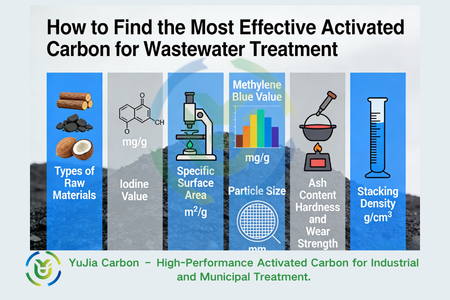
Iodine value is the core index to measure the microporous content of activated carbon, which directly reflects its adsorption capacity for small molecule pollutants; specific surface area reflects the total adsorption capacity of activated carbon, the larger the specific surface area, the stronger the adsorption capacity. For municipal wastewater treatment, iodine value and specific surface area need to be controlled in a reasonable range: the general iodine value is recommended to be 800-1200mg/g, and the specific surface area is 800-1500m²/g, which can not only meet the demand of removing conventional pollutants, but also avoid the waste of cost due to the high index.
Methylene blue value is mainly used to measure the adsorption ability of activated carbon on large molecule pollutants, which is the key index to judge the decolorization effect of activated carbon. If there are dyes, macromolecule organic matter and other color problems in municipal wastewater, the activated carbon with higher methylene blue value should be preferred to ensure that the decolorization effect meets the standard, and it is generally recommended that the methylene blue value should not be less than 100mg/g.
The particle size of activated carbon directly affects the adsorption rate and system resistance: the smaller the particle size, the faster the adsorption rate, but it will increase the pressure drop of the filtration system, which is easy to cause clogging; the larger the particle size, the smaller the pressure drop, but the adsorption rate will be reduced. For granular activated carbon (GAC) filters, it is recommended that the particle size be controlled at 0.8-2.0mm, taking into account the adsorption efficiency and system stability; powder activated carbon (PAC) is recommended to have a particle size of more than 100 mesh, to ensure that it mixes with the sewage adequately.
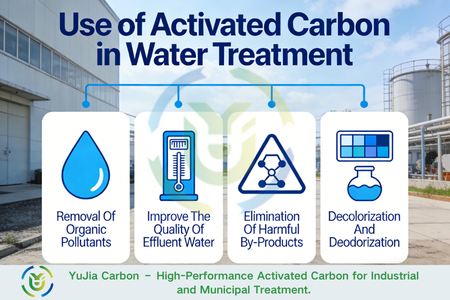
Highly efficient adsorption of volatile organic compounds (VOCs), benzene, polycyclic aromatic hydrocarbons (PAHs) and other difficult to degrade organic pollutants in sewage, such pollutants are difficult to be completely removed by conventional biochemical treatment, the adsorption of activated carbon can effectively reduce its content, reduce the risk of contamination of the water body to ensure that the organic matter in the effluent water meets the standards.
Effectively reduce the biochemical oxygen demand (BOD) and chemical oxygen demand (COD) content in the sewage, reduce the organic load in the water body, and at the same time improve the biochemistry of the effluent, lay a good foundation for the subsequent in-depth treatment processes (such as disinfection, reuse treatment), to ensure that the effluent meets the requirements of higher standards.
Targeted removal of residual chlorine and disinfection by-products in sewage, avoiding the impact of residual chlorine on subsequent treatment equipment and water environment; at the same time, adsorption of odor substances and toxic by-products in sewage, avoiding secondary pollution from the source, and guaranteeing the safety and environmental protection of the effluent.
In view of the possible chromaticity problems (such as yellowing and darkening caused by industrial wastewater mixing and humus) and odor in municipal wastewater, through the adsorption effect of activated carbon, it can efficiently remove pigment molecules and odor substances, significantly improve the sensory quality of the effluent, and meet the needs of scenarios such as landscape water and reclaimed water.
Hardness and abrasion strength are the core indexes to guarantee the service life of activated carbon, especially for the municipal sewage treatment equipment with backwashing system. Activated carbon with high hardness and good abrasion strength is not easy to be broken and lost during the backwashing process, which can reduce the loss of activated carbon and lower the operation cost. Generally, it is required that the wear-resistant strength of activated carbon is not less than 90% to ensure that the structure remains intact in long-term operation.
Ash is an impurity component in activated carbon, and high ash content will occupy the pore space of activated carbon and reduce the adsorption performance, while affecting the regeneration efficiency and regeneration times of activated carbon. In municipal wastewater treatment, it is recommended to choose activated carbon with ash content lower than 10%, which can ensure the adsorption effect and prolong the service life of activated carbon and reduce the regeneration and replacement cost.
Stacking density affects the transportation cost and equipment loading of activated carbon: the higher the stacking density is, the higher the quality of activated carbon per unit volume is, the higher the space utilization rate is during transportation, and the transportation cost can be reduced; however, too high stacking density may lead to the reduction of porosity and affect the adsorption performance. When selecting activated carbon, it is necessary to balance the packing density and adsorption performance, and it is generally recommended that the packing density should be 0.4-0.6g/cm³, which is suitable for the loading requirements of municipal wastewater treatment equipment.
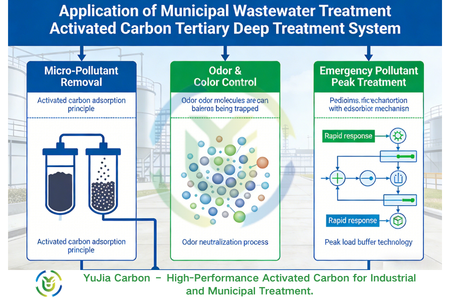
Tertiary deep treatment of the core objective is to further remove residual pollutants in the sewage to ensure that the effluent meets the reuse or strict discharge standards, it is recommended to prioritize the selection of high-quality granular activated carbon (GAC). Selection focuses on the hardness and regeneration capacity of the activated carbon to ensure that it can operate stably for a long time, reduce the frequency of replacement and lower operating costs.
With the improvement of municipal wastewater treatment requirements, the removal of micro-pollutants such as drugs, perfluorinated and polyfluorinated alkyl substances (PFAS) has become a priority. Such pollutants have small molecules and are difficult to be degraded, so it is necessary to choose activated carbon with large specific surface area and optimized pore distribution to ensure efficient adsorption of micro-pollutants, and it is recommended to give priority to coconut shell activated carbon or high-quality coal-based activated carbon.
If the core demand of municipal wastewater treatment is decolorization and deodorization (e.g., the effluent from wastewater treatment plant is used for landscape water, reclaimed water, etc.), it is recommended to choose wood-based activated carbon. Wooden activated carbon has high mesoporosity, outstanding adsorption effect on large molecule pigments and odor substances, and moderate cost, which can meet the needs of decolorization and deodorization.
When encountering the rainy season, industrial wastewater mixing and other circumstances leading to the municipal wastewater pollutant concentration suddenly rise, the need for a rapid response, it is recommended to use the powdered activated carbon (PAC) dosing strategy. PAC does not require complex equipment, can be directly added to the existing biological treatment system, rapid adsorption of pollutants, temporary enhancement of the treatment effect, to cope with the emergency scenarios.
Empty bed contact time refers to the residence time of sewage in the activated carbon bed, which directly affects the removal efficiency of pollutants. For municipal wastewater treatment, it is recommended that the empty bed contact time be controlled at 10-30 minutes, too long a residence time will increase the energy consumption and floor space of the system, and too short a residence time will not guarantee the adsorption effect, which needs to be reasonably adjusted according to the concentration of pollutants and treatment objectives.
The flow rate and hydraulic load of the sewage treatment system should be kept stable to avoid excessive flow rate fluctuation, which will lead to uneven force on the activated carbon bed and decrease the adsorption effect. When designing, it is necessary to consider the change rule of municipal sewage flow and set up buffer devices to ensure that the activated carbon bed layer can operate under stable hydraulic conditions and ensure stable adsorption performance.
For granular activated carbon (GAC) filter, backwashing is the key link to maintain the bed performance. Backwashing needs to control the appropriate intensity and time, not only to effectively remove the impurities in the bed, prevent the phenomenon of ditch flow (sewage in the bed to form a channel, reducing the adsorption efficiency), but also to avoid the loss of activated carbon caused by excessive intensity of backwashing, bed damage, to ensure the integrity of the bed.
Activated carbon will reach adsorption saturation after a period of time, and needs to be regenerated or replaced. At present, the commonly used regeneration method is thermal regeneration, which can effectively restore the adsorption performance of activated carbon. Selection should consider the economics of regeneration: for large municipal wastewater treatment plants, on-site regeneration can be used to reduce transportation costs; small wastewater treatment plants can choose off-site regeneration to reduce equipment investment. At the same time, it is necessary to compare the regeneration cost and the cost of replacing new activated carbon, and choose the optimal program.
The initial purchase cost of different types of activated carbon with different indexes varies greatly, so it is necessary to avoid wasting costs by blindly pursuing high indexes, and the product with the best price/performance ratio should be selected in combination with the treatment goal. For example, there is no need to choose high-end activated carbon with high iodine value and high specific surface area for regular municipal sewage treatment, and ordinary coal-based activated carbon can meet the demand, so as to effectively control the initial procurement cost.
The longer the regeneration cycle of activated carbon, the lower the unit treatment cost. When selecting activated carbon, it is necessary to pay attention to the regeneration performance of activated carbon, and prioritize the products with more regeneration times and high regeneration efficiency to reduce the long-term operation cost. Usually, the regeneration cycle of granular activated carbon is longer than that of powder activated carbon, which is suitable for long-term stable operation scenarios and can reduce the regeneration frequency and cost investment.
The stacking density and transportation distance will affect the transportation cost; the disposal of activated carbon after end-of-life needs to meet the requirements of environmental protection, and the disposal cost should be taken into consideration, and the products that are easy to be disposed of and environmentally friendly should be preferred. Coal-based activated carbon with higher stacking density has a higher space utilization rate during transportation, which can reduce the transportation cost; wood-based activated carbon has a wide range of sources, is easy to degrade, and has a relatively low disposal cost.
Comprehensively consider the initial purchase cost, regeneration cost, transportation cost, disposal cost, etc., calculate the total cost of ownership of activated carbon, and select the selection plan with the lowest TCO. TCO can reflect the economy of activated carbon more comprehensively, avoiding only focusing on the initial cost and ignoring the hidden cost of regeneration and disposal in long-term operation.
The iodine value only reflects the adsorption ability of activated carbon on small molecule pollutants, and if other indexes such as pore distribution and hardness are ignored, activated carbon may not be able to meet the actual treatment demand. For example, some municipal wastewater contains more large molecule pigments, even if the iodine value reaches the standard, if the pore distribution is unreasonable, the decolorization effect will be greatly reduced.
Different pollutants have different molecular sizes, the required pore size of activated carbon is also different, ignoring the pore distribution will lead to poor adsorption effect of activated carbon on the target pollutants. Small molecule pollutants (such as VOCs) need activated carbon with well-developed micropores, while large molecule pollutants (such as dyes) need products rich in mesopores and macropores, and there is an obvious difference in the logic of selection between the two.
If the hardness and abrasion strength of the activated carbon is insufficient, it is easy to be broken and lost during the backwashing process, leading to increased replacement frequency and higher operating costs. Especially for granular activated carbon filters with backwashing system, insufficient mechanical strength will significantly shorten the service life of activated carbon and increase the replacement and maintenance costs.
The water quality of different municipal wastewater varies greatly, and the direct use of empirical selection may lead to insufficient adaptability of activated carbon, and pilot tests should be carried out to verify the adsorption effect of activated carbon before it is officially put into use. Pilot test can simulate the actual processing conditions, accurately determine the processing efficiency of activated carbon, to avoid large-scale input after the treatment effect does not meet the standard.
With the improvement of water quality requirements, drugs, PFAS and other micropollutants removal will become the focus, the future will pay more attention to the adsorption performance of activated carbon on micropollutants, to promote the research and development of specialized activated carbon. Such special activated carbon will optimize the pore structure and enhance the selective adsorption capacity of micro-pollutants to meet the more stringent water quality discharge standards.
Combining activated carbon with advanced oxidation process can realize the synergistic effect of “adsorption + oxidation” and improve the removal efficiency of difficult-to-degrade pollutants, which will become an important direction for municipal deep wastewater treatment in the future. After adsorption of pollutants by activated carbon, degradation of pollutants through the advanced oxidation process can extend the service life of activated carbon, and at the same time improve the treatment effect, which is suitable for the treatment of difficult-to-degrade pollutants.
By impregnating specific chemical substances on the surface of activated carbon, the adsorption capacity of specific pollutants, such as heavy metals and specific organic substances, can be improved to meet individualized treatment needs. For example, impregnated activated carbon can adsorb heavy metal ions in municipal wastewater, filling the short board of conventional activated carbon’s insufficient adsorption capacity for heavy metals.
During the selection process, more consideration will be given to the carbon footprint of the production, regeneration and disposal of activated carbon, and priority will be given to environmentally friendly, low-carbon and recyclable activated carbon products, so as to promote the green development of the wastewater treatment industry. In the future, low-carbon production process and efficient regeneration technology will be widely used in the activated carbon industry to realize the double improvement of environmental protection and treatment efficiency.
The selection of activated carbon for municipal wastewater treatment is a systematic project, which needs to be combined with the type of activated carbon, core performance indicators, application scenarios, system design and cost factors for comprehensive consideration, so as to avoid falling into the selection of the wrong area. The core principle is: treatment target-oriented, taking into account the adsorption performance and economy, through scientific selection, to achieve efficient, stable and low-cost operation of municipal wastewater treatment.
In the future, with the continuous progress of sewage treatment technology and environmental protection requirements, the selection of activated carbon will be more refined, personalized, specialization, green will become the mainstream of development.